
Last updated November 24, 2026
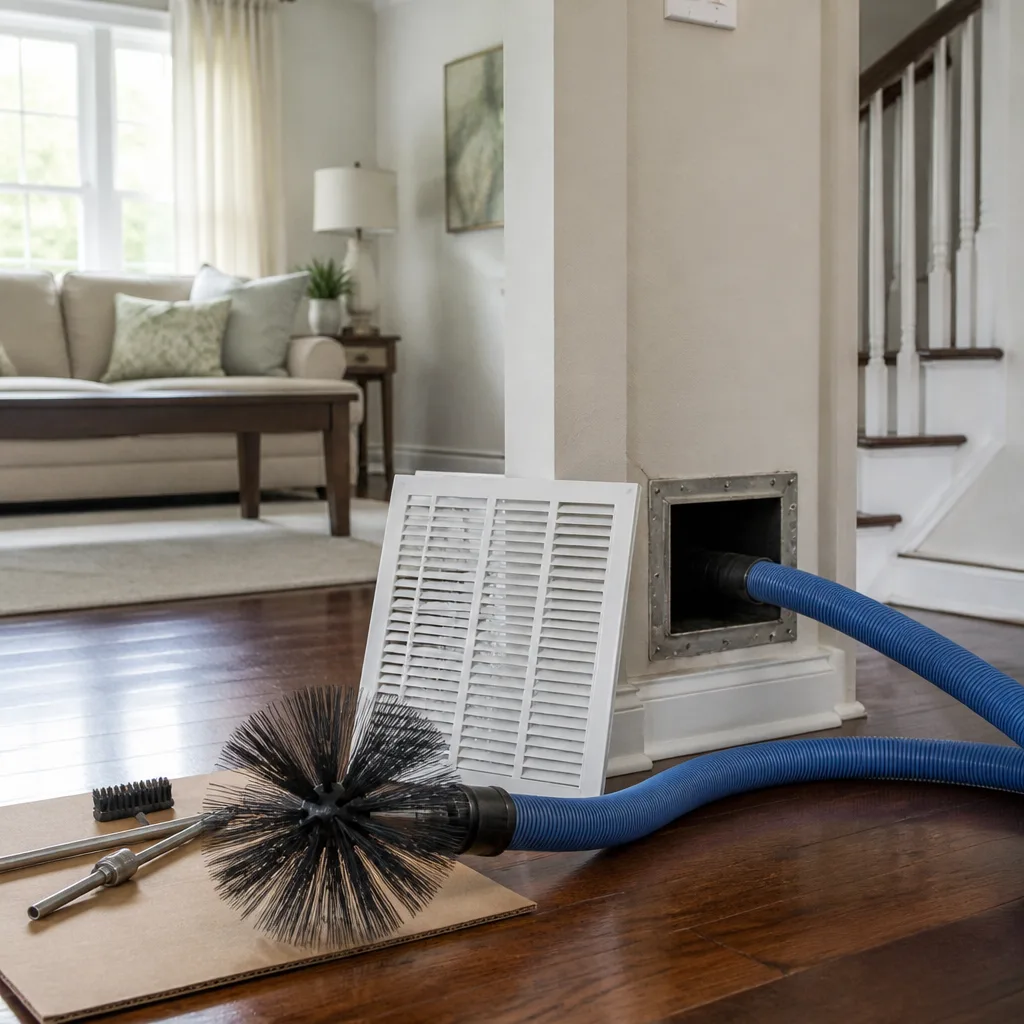 Whole-home duct cleaning
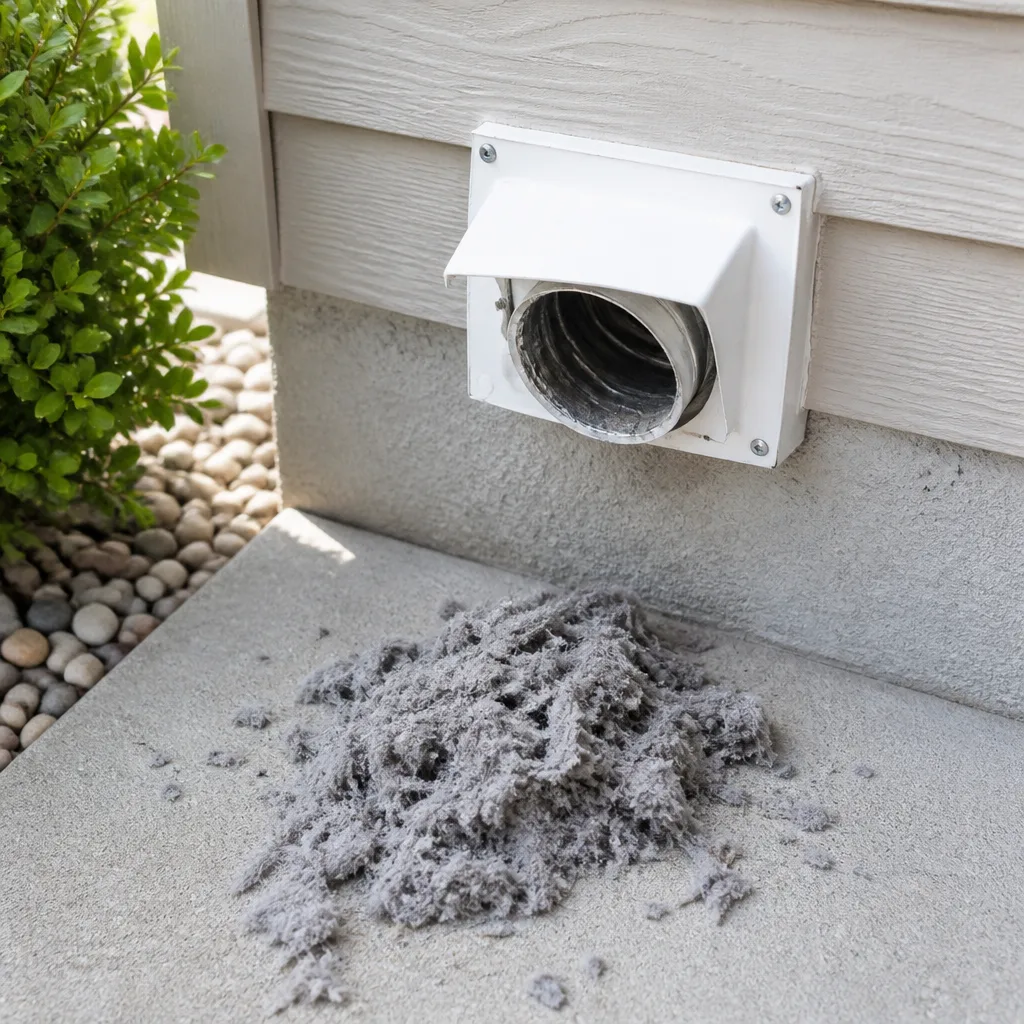 Dryer vent cleaning
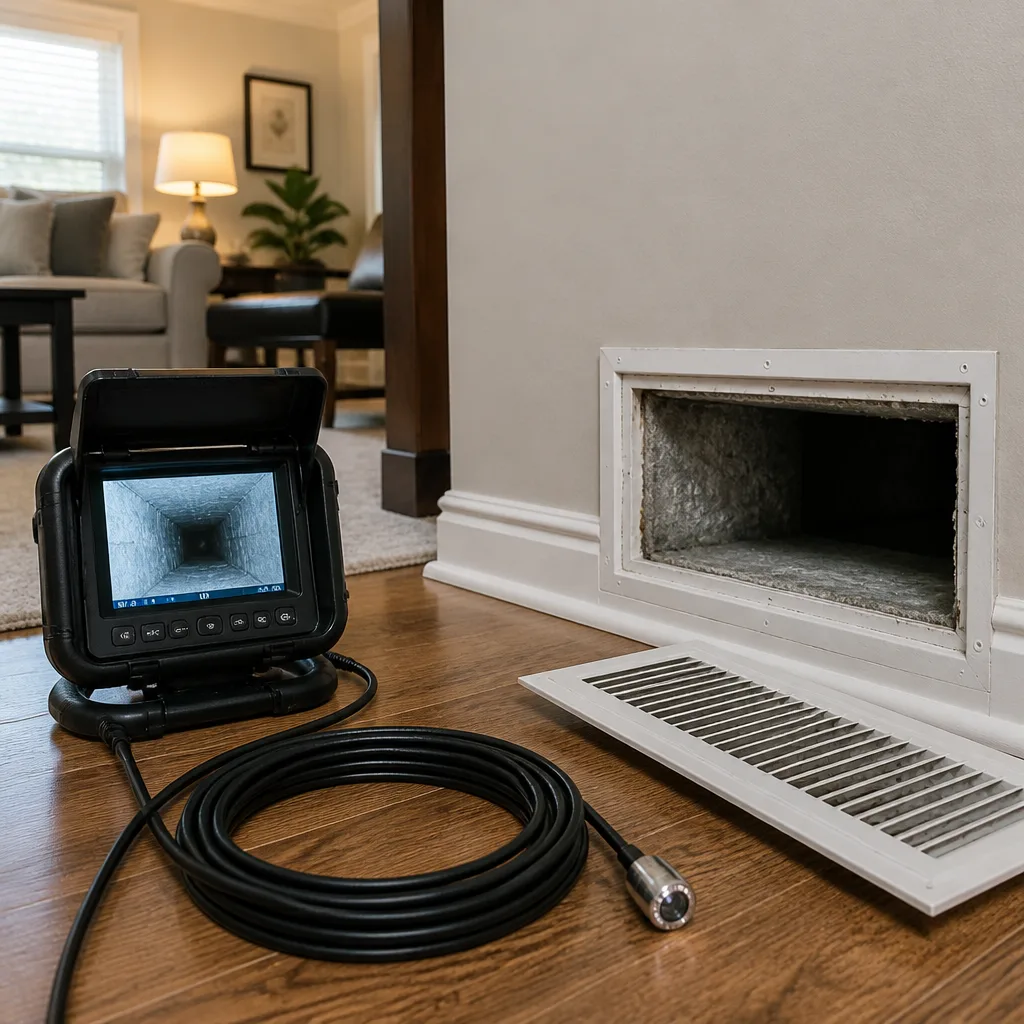 Camera inspection
 Sanitizing & deodorizing
Whole-system duct and dryer vent check with before-and-after photos - you see exactly what came out of your vents
That "$99 whole-house special" is a bait ad - the real number appears once they are in your hallway, or the "clean" is a shop-vac at the register. We photograph the inside of your ducts before and after instead.
Air Duct Cleaning Troubleshooting in Magnolia: Common Problems and How to Fix Them
The complaint that brings most homeowners to our phone is a room that never gets warm. The assumption behind it is usually contamination: the ducts are dirty, so the air can’t get through. In our experience, that assumption is wrong often enough to matter. A room that stays cold while the rest of the house is comfortable usually points to a mechanical problem – a disconnected duct section, a crushed run, a damper stuck shut – and cleaning a system with a break in it changes nothing about the temperature. This guide teaches you how to read your system’s symptoms before you spend money on anything. You’ll learn to sort airflow problems from air quality problems, recognize the patterns behind leakage, blockage, and growth, and know which checks are safe for you to run in a Magnolia home.
Quick Answer
Troubleshoot duct problems in Magnolia by separating airflow complaints from air quality complaints first. Weak or uneven airflow almost always traces to mechanical causes – duct leakage, crushed or disconnected runs, blocked registers, or a restricted filter – while dust, odors, and allergy symptoms point toward contamination or biological growth inside the system. Cleaning fixes the second category; only inspection, repair, and sealing fix the first. Static pressure testing is what tells you which one you’re dealing with.
Styles & brands we work with
- Whole-home duct cleaning
- Dryer vent cleaning
- Camera inspection
- Sanitizing & deodorizing
Table of Contents
- Is it an airflow problem or an air quality problem?
- What do leakage, blockage, and biological growth each look like?
- Why does static pressure testing matter so much?
- What can you safely inspect yourself?
- A symptom-to-solution decision tree for Magnolia homes
- How Magnolia’s housing stock changes the diagnosis
- Why cleaning without repair leaves the problem in place
- When to call a professional
Is it an airflow problem or an air quality problem?
This is the first fork in the road, and getting it wrong is the most expensive mistake a homeowner can make. Airflow problems are mechanical and structural. Something is restricting, diverting, or losing the air your system produces. Air quality problems are about what’s riding along in that air – dust, debris, microbial growth, construction residue, dryer lint. The two overlap sometimes, but they respond to completely different work.
Here’s how to tell them apart at the kitchen table, before anyone touches a tool:
- Leaning airflow: one or more rooms that never reach the temperature the thermostat calls for, weak throw from certain registers, a system that runs long cycles without satisfying the house, whistling or rushing sounds at the supply grilles.
- Leaning air quality: dust settling on surfaces faster than it used to, musty or stale odors when the blower starts, visible debris around the registers, allergy-type symptoms that seem worse indoors.
- Both at once: a house that is dusty and uneven. That combination usually means a leaking duct system pulling attic or crawlspace air into the supply side – a mechanical fault with a contamination consequence.
In our experience across Magnolia, homeowners tend to buy cleaning for problems that are actually mechanical. It feels like the intuitive fix, and it’s the service the industry advertises hardest. But if your complaint is “the back bedroom is always cold,” a cleaning won’t move the needle. That’s why we start with diagnosis. We don’t just clean – we seal, repair, and sanitize the full system, and the order matters.
One practical shortcut: check whether the problem room has any airflow at all. A register with strong flow that still can’t heat or cool the room points toward envelope issues, window performance, or an undersized run – not contamination. A register with barely detectable flow points toward a restriction or a break upstream.
What do leakage, blockage, and biological growth each look like?
Every duct problem announces itself differently. Matching the symptom to the mechanism is what makes a diagnosis reliable, and it’s what keeps you from paying for the wrong service. Here are the three patterns we see most often in Magnolia homes, and the response each one calls for.
Duct leakage
Leakage is the most common cause of uneven performance, and the hardest for a homeowner to see, because it usually happens in the places you never look – joints behind drywall, the connection at the plenum, loose takeoffs, failed tape and mastic at the trunk. Symptoms include rooms that are hard to satisfy, dust that accumulates near the return, a system that runs constantly, and in the worst cases, air quality complaints because the supply side is drawing from an attic or crawlspace. The response is sealing: mastic, mesh, and proper joint repair at the points where the system is losing pressure.
Blockage
Blockage is a restriction, not a loss. Common causes are crushed or kinked flex duct (very common in attics where a run has been stepped on or pinched during other work), a closed or broken damper, a register covered or blocked by furniture, debris left in a run during renovation, and a filter that hasn’t been changed. Symptoms are a specific register with weak flow, a room that gets worse over time, or a blower that sounds strained. The response is inspection, then correction – rerouting, replacing the crushed section, opening or replacing the damper, or simply uncapping the register.
Biological growth
Growth inside a duct system typically shows up as odor – a musty, earthy, or stale smell that shows up when the blower starts and fades when it stops. You may see dark staining at the register boots or around the evaporator coil, but the growth itself usually lives where you can’t see it. The response is cleaning followed by sanitizing, plus a look at the moisture source. Growth doesn’t happen in a dry system, so if we find it, we also look for the reason the duct is damp – a coil issue, a condensate problem, or humid outdoor air infiltrating a leaking return.
- Leakage response: sealing and joint repair, then verification by pressure test.
- Blockage response: camera inspection, then rerouting or replacement of the restricted run.
- Growth response: cleaning, sanitizing, and correcting the moisture source.
These aren’t interchangeable. Cleaning a leaking system leaves the leak. Sealing a contaminated system traps the debris. The diagnosis has to come first.
Why does static pressure testing matter so much?
Static pressure testing is the measurement that separates a real duct specialist from a cleaning-only crew. A manometer measures the pressure resistance in your duct system – how hard the blower has to work to move air through the runs. A system within spec tells you the ductwork is doing its job. A system reading high tells you there’s a restriction, undersized ducting, or a filter problem. A system reading low can signal leakage on the supply side. The number alone doesn’t tell you everything, but it tells you where to look next, and it’s the starting point for every serious diagnosis.
Why it gets skipped: it takes time, it takes a manometer, and it doesn’t lend itself to a coupon price. A crew that arrives with a vacuum and no gauge is a cleaning crew. There’s nothing wrong with cleaning – it’s necessary work – but cleaning without measurement is guesswork about a system you haven’t assessed.
In our experience, the pattern is consistent. Homes with chronic comfort complaints almost always show a static pressure problem, and it’s frequently not the one the homeowner suspected. A cold bedroom thought to be a “dirty duct” issue turns out to be a crushed flex run feeding it. A dusty house thought to need a whole-system cleaning turns out to be a return duct drawing attic air through a gap. The measurement finds the fault; the diagnosis sorts the response.
For a Magnolia homeowner, this matters because the housing stock here produces both kinds of problems. Older ranches often have original duct layouts that were sized for a different blower and have been patched and taped over many episodes of other work. Newer construction tends to have long runs with lots of elbows and less-than-generous sizing for high-efficiency equipment. Both patterns show up on a pressure gauge before they ever show up in a cleaning bag.
We use professional-grade Rotobrush and Nikro systems because they’re built for the work this diagnosis leads to – full-system cleaning with real equipment, not improvised tools. And we carry Abatement Technologies filtration equipment because some of what we encounter during Magnolia jobs goes beyond routine dust. When the gauge, the camera, and the cleaning step all point the same way, the response is clear.
What can you safely inspect yourself?
Plenty. In fact, the more you can check before calling, the better the conversation goes and the faster the diagnosis lands. Here’s the safe list, and the hands-off list.
Safe to check yourself
- Registers and grilles. Pop off the supply and return grilles in every room and look inside with a flashlight. You’re checking for two things: debris packed against the boot, and any visible gap where the boot meets the duct. A gap you can see is a leak.
- Register airflow. Hold a piece of tissue or a light ribbon at each supply and watch how it moves. Even, strong flutter is good. Sagging or nothing at all is a restriction signal. Compare rooms to each other – that’s the diagnostic value.
- Filter housing. Pull the filter and look at both faces. A filter that’s gray and matted is restricting the system and changing the pressure profile. A filter slot with a gap around the filter is pulling unfiltered air – a quick seal with foam tape often helps.
- Visible flex duct. In an attic, basement, or crawlspace, look for crushed runs, disconnected sections (you’ll see a boot hanging free), and tape peeling off joints. Don’t move anything – just look and photograph.
- Condensate and coil area. Look for standing water, rust, or dark staining near the air handler. Moisture near the coil is a common growth source.
Requires professional scoping
- Inside the trunk lines and any run you can’t see from a register or from the attic. That takes a camera.
- Static pressure measurement – a real diagnostic, not a guess.
- Any ductwork behind drywall or under flooring.
- The evaporator coil interior and the blower wheel.
- Electrical components at the air handler. Do not open panels.
One caution, and we mean it: if the unit is running and you’re in an attic, don’t touch the flex duct runs while the blower is on. Static pressure can collapse a marginal connection and cause a sudden discharge. Look, photograph, and leave it in place.
A symptom-to-solution decision tree for Magnolia homes
This is the part we wish every Magnolia homeowner had on the refrigerator. Read your symptom, follow the branch, and you’ll arrive at the right service – not the one being advertised.
- Symptom: one room never gets warm or cool; strong airflow at that room’s register.
Branch: likely a room-loading or envelope problem, not the duct system. Check window seals, insulation, and whether the register diffuser is aimed correctly. Duct work won’t fix this one. - Symptom: one room never gets warm or cool; weak or no airflow at that register.
Branch: restriction or disconnection on that run. Inspect the visible portion; if it’s crushed, reroute or replace. If it’s not visible, camera scope. - Symptom: multiple rooms inconsistent; house runs long cycles; dust returns quickly.
Branch: leakage. Verify with static pressure test, then seal. Cleaning alone won’t help. - Symptom: musty odor when the blower starts; odor fades when it stops.
Branch: growth. Clean, sanitize, and find the moisture source. - Symptom: visible dust accumulation on registers and near returns; no comfort complaint.
Branch: contamination. Air duct cleaning is the right service. Follow with a filter check. - Symptom: whistling, rushing noise at registers.
Branch: high static pressure – restriction or undersized ductwork. Pressure test first. - Symptom: dryer takes two cycles; lint visible around the vent hood.
Branch: dryer vent restriction. This is a safety item, not a comfort item – dryer vent cleaning is urgent regardless of what else you’re having done. - Symptom: persistent odors from the air handler itself, or a musty smell that doesn’t originate at a register.
Branch: the coil and blower are the source. HVAC cleaning addresses the air handler; a duct cleaning alone won’t reach it.
If your symptom maps to more than one branch – which happens often – that’s not a sign you’ve misread it. It’s a sign the system needs a full inspection. One visit, the full picture: cleaning, inspection, repair if needed.
How Magnolia’s housing stock changes the diagnosis
Duct problems are not generic. The housing stock on the ground changes which faults you see most and where they hide. Magnolia skews toward two patterns that produce very different troubleshooting profiles.
Older ranch homes
Ranches tend to have duct systems that were sized for original equipment and have been patched many times over. The characteristic problems here are leakage at old mastic joints that have dried and separated, duct runs that have been disturbed by attic work, and dampers that were installed decades ago and no longer move. The other common finding is a supply trunk sized for a blower that has since been replaced with a higher-static-pressure unit – the ductwork still works, but it’s fighting a mismatch. In our experience, ranches reward a static pressure test more than almost any other house type, because the answer is often in the pressure reading, not the cleaning bag.
Newer construction with long runs
Newer houses here often have longer duct runs with more elbows, feeding rooms that are farther from the air handler. Long runs accumulate static pressure the same way elbows do. The classic complaint here is “the far bedroom never heats” in a house that’s otherwise tight and well insulated – and the answer is usually a run that’s slightly undersized for the load, or a run with one too many transitions. Blockage from kinked flex is also common during construction and renovation, because runs get stepped on. The response is often rerouting and a balancing check, not cleaning.
What both have in common
Both patterns benefit from a whole-system approach. The insulation and envelope in Magnolia homes have improved dramatically over the years, so a smaller amount of duct leakage now represents a proportionally greater share of total air loss. That means sealing matters more than it used to, and cleaning alone does less. Cleaning is still the right service for contamination, but we look at the whole system before recommending it.
If you’re wondering whether you’re in a neighborhood that rewards this kind of diagnosis, the answer is all of them in some way. The troubleshooting logic is what travels, not the address.
Why cleaning without repair leaves the problem in place
This is the principle that makes the biggest difference in how a duct service actually resolves a complaint. Cleaning removes debris from a system. Sealing and repairing fix the system’s performance. If you clean a dust-laden system that is also leaking badly, you’ve done half the job, and the dust returns quickly – because unfiltered attic or crawlspace air is still being drawn in through the leak.
Six months later, the complaint comes back and the homeowner concludes “duct cleaning didn’t work.” What actually happened is that cleaning worked, and the leak wasn’t’ addressed.
The sequence that resolves problems:
- Diagnose. Static pressure test, visual inspection, and camera scoping where needed.
- Seal and repair. Address leakage and restriction at the joints and connections.
- Clean. Remove accumulated debris from the now-sealed system with professional-grade equipment.
- Sanitize if indicated. Treat growth where it’s been found, and correct the moisture source.
- Verify. Re-check pressure where relevant and confirm the fix.
That’s why we treat duct repair and sealing as a first-class service line, not an add-on. And it’s why we work with Honeywell and Aprilaire whole-home air quality systems – in homes where those systems are present, the ductwork and the air treatment equipment have to be evaluated together, because a solution that ignores the air treatment equipment isn’t a full-system solution.
The other part of this is accountability. If we recommend a cleaning and the underlying problem is a leak, we’ve sold you the wrong service. Our job is to tell you what the system needs, then do it well.
Common Mistakes to Avoid
- Buying a cleaning to fix a comfort complaint. Cleaning doesn’t change airflow. If one room is uncomfortable, get the pressure tested before you spend money on cleaning. Magnolia homes with chronic unevenness nearly always have a mechanical cause.
- Skipping the static pressure test. A crew that arrives with a vacuum and no manometer is a cleaning crew, not a diagnostic one. That’s fine if you know what you’re buying, but it’s a mistake if you’re trying to solve a comfort problem.
- Assuming a low price means the whole system. “One price per system” and “one price per vent” are completely different products. Ask what’s included, and get it in writing.
- Cleaning before sealing. Cleaning a leaking system costs you the cleaning again within months. Seal first, then clean.
- Forgetting the filter housing. A filter with gaps around it means unfiltered air is bypassing the filter entirely. Check the seal and use foam tape if the fit is loose.
- Ignoring the dryer vent because the ducts are the “real” problem. A clogged dryer vent is a fire risk and doesn’t wait. If the dryer takes two cycles, address it now, not later.
- Calling only one company and taking the estimate as the market rate. Not a rule against single calls, but a caution: ask what’s included, ask whether repair and sealing are on the menu, and ask for before-and-after photos of your own ducts if cleaning is recommended.
See the difference
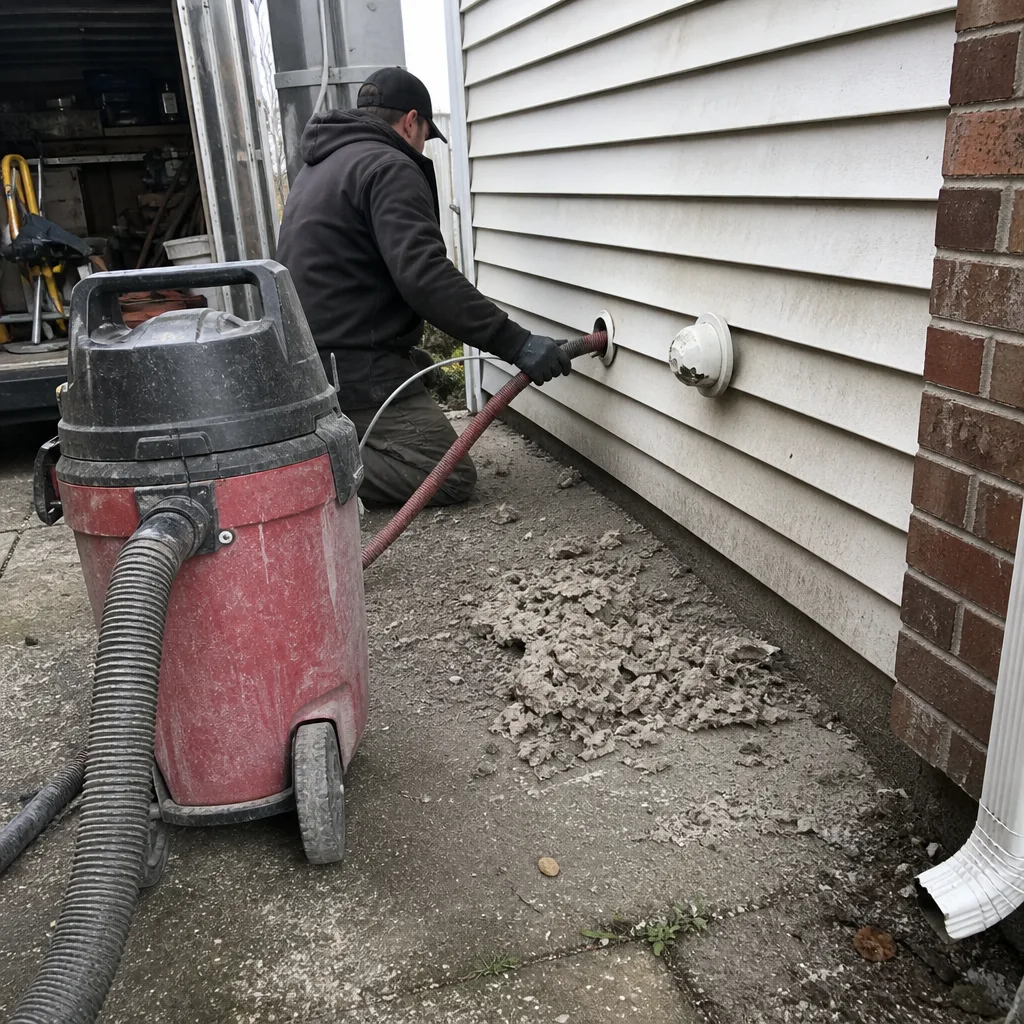 Before
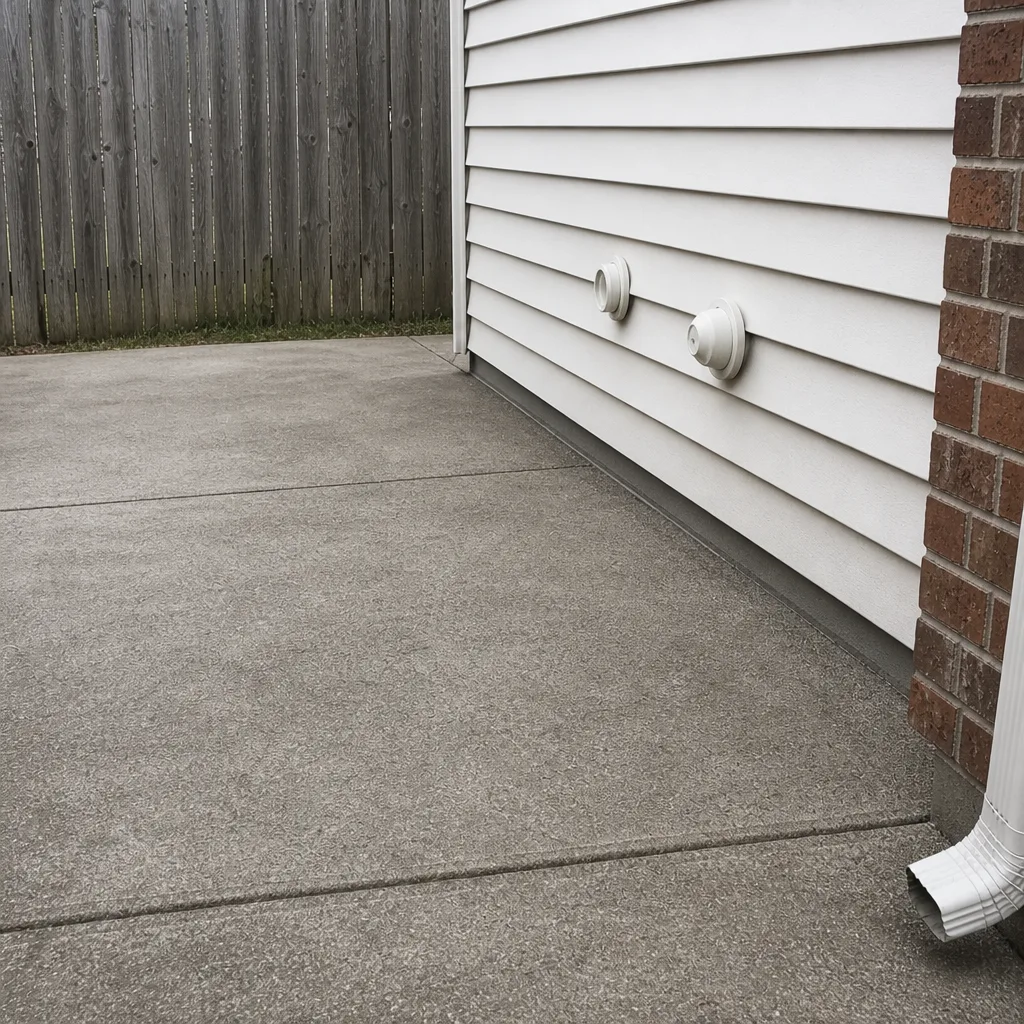 After
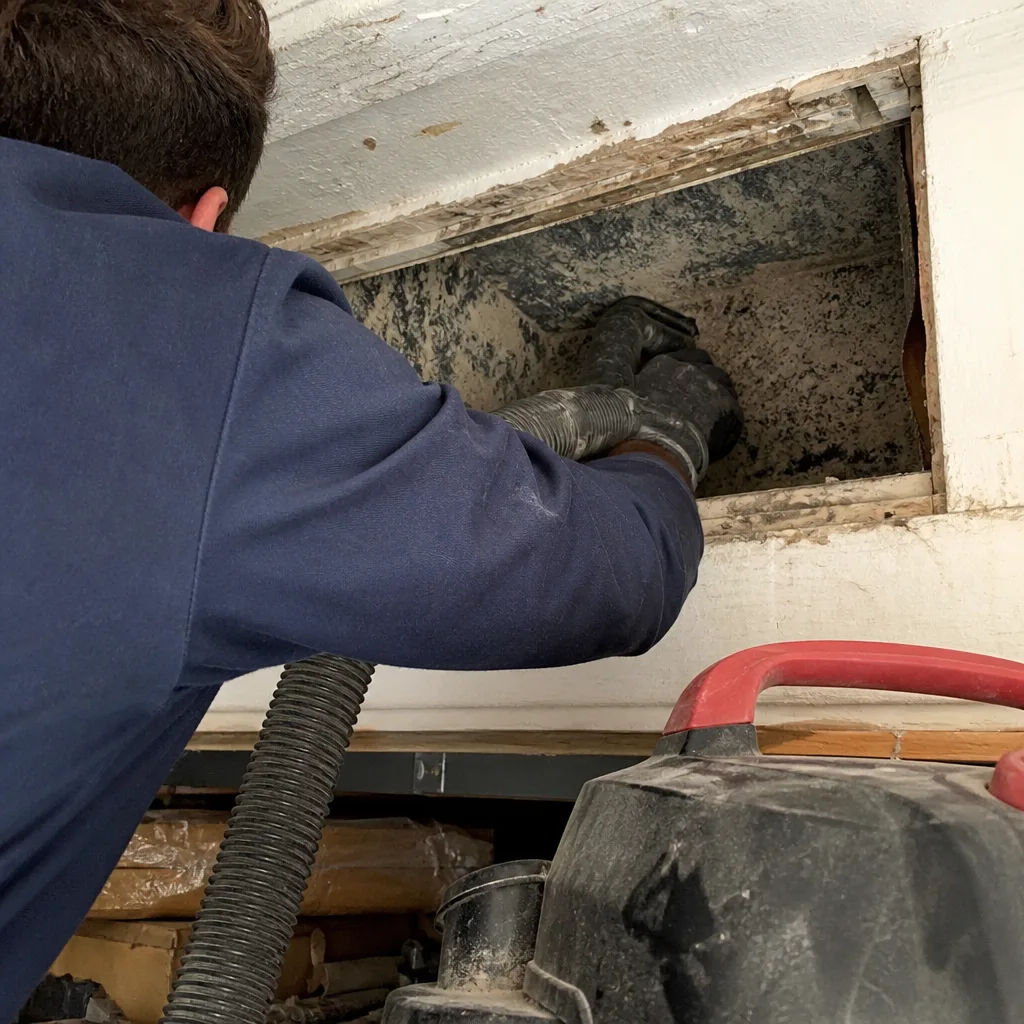 Before
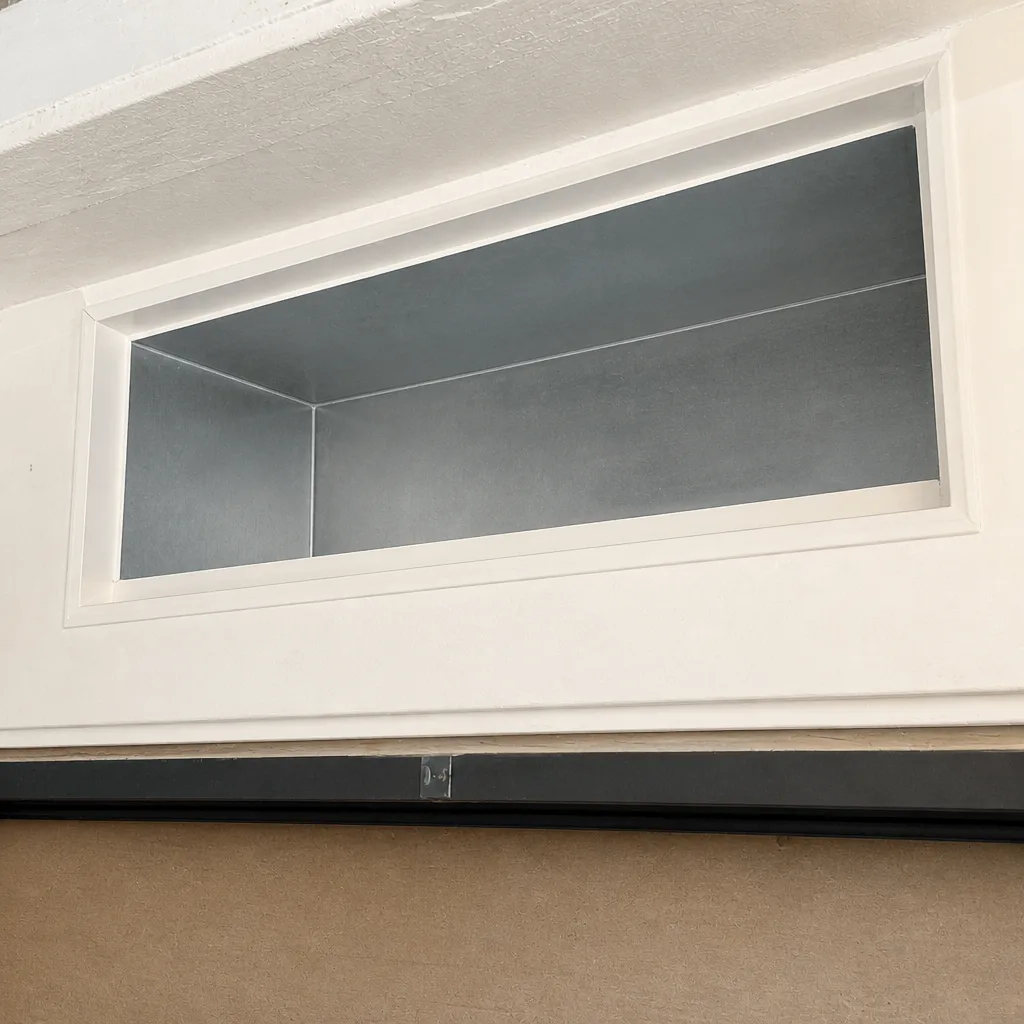 After
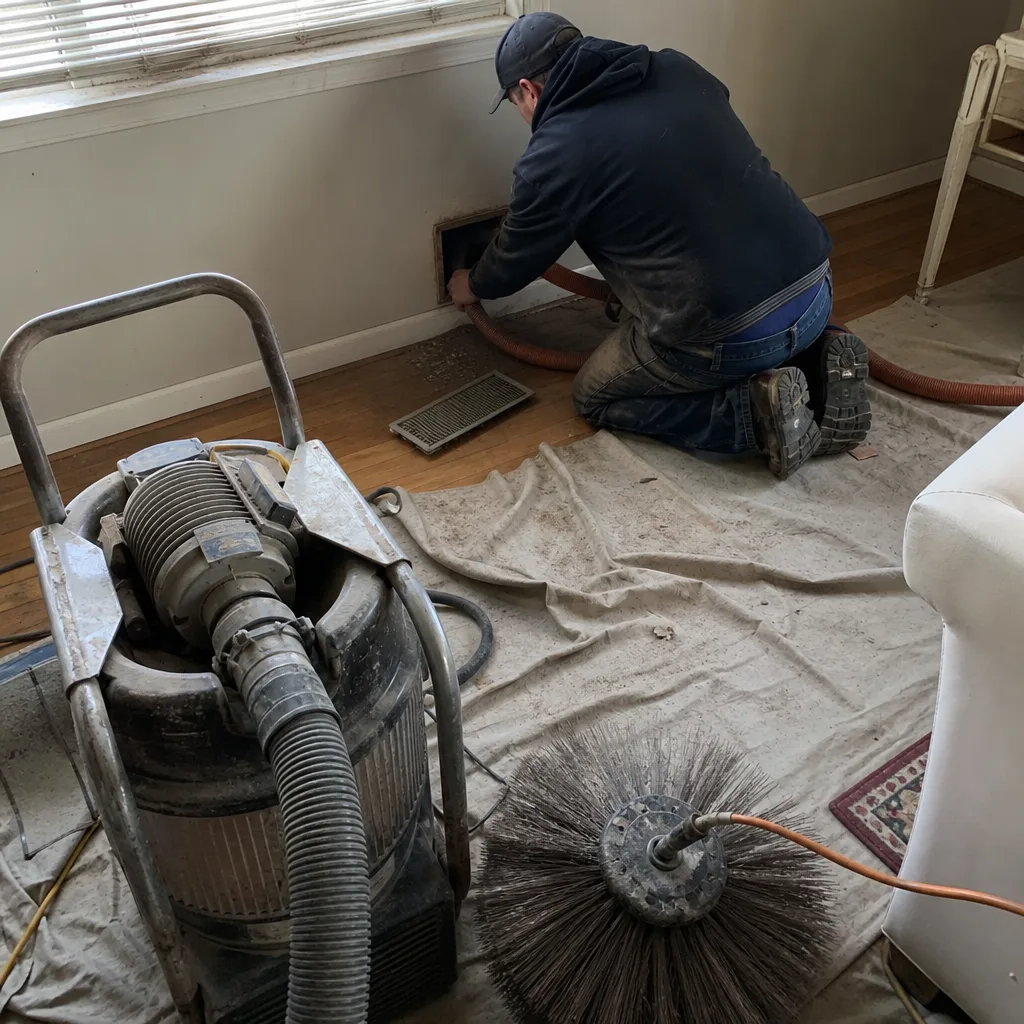 Before
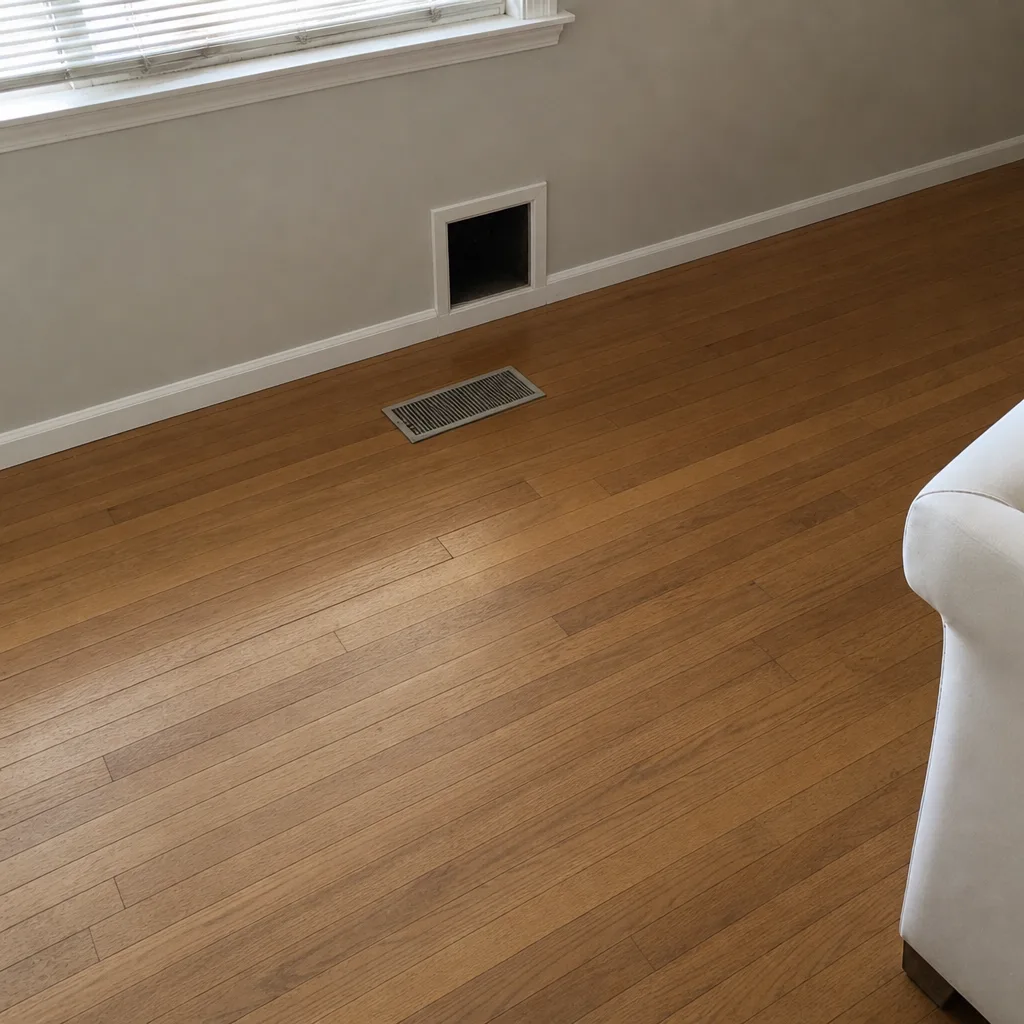 After
When to Call a Professional
Call when the symptom you’re reading doesn’t map to a branch you can check yourself. If one room’s register has no visible flow and the run isn’t visible from a register, an attic hatch, or the mechanical area, that’s a camera scope job. If the whole house runs long cycles and dust keeps coming back after cleaning, that’s a pressure test and a sealing job. If you smell something musty every time the blower starts, that’s a cleaning and sanitizing engagement with a moisture search. If the dryer takes two cycles, treat it as urgent regardless of everything else. And if you’re about to buy a cleaning to fix a comfort complaint, call first and get the diagnosis done properly.
Magnolia Air Duct Cleaning offers free estimates in Magnolia – call (877) 309-8232. We answer 24/7. Fast dispatch from 7am to 7pm, Sunday through Friday. The estimate is set per job by the written estimate, so you know the price before anything starts.
Our technicians have up to 10 years of experience with Rotobrush and Nikro systems and with Honeywell and Aprilaire whole-home air quality equipment. We work with local professionals who are licensed and insured as their state requires. Before-and-after photos of your own system are part of how we work.
Frequently Asked Questions
It depends on your symptom. If the complaint is dust, odor, or allergy symptoms, cleaning is the likely answer. If the complaint is uneven temperature, weak airflow, or long runtimes, repair and sealing is the likely answer. Static pressure testing and a visual scope separate the two. Call (877) 309-8232 for a free estimate – the diagnosis is what sets the course.
It tells you how hard your blower is working to push air through your ductwork. High readings indicate restriction or undersized ductwork; low readings on the supply side indicate leakage. The number gives the technician a starting point and a baseline to verify after the fix. It’s a measurement, not a guess, and it’s the single most useful diagnostic on a duct system.
The most common cause is a restriction on the run serving that room – a crushed flex section, a closed damper, or a disconnect that isn’t visible from the register. Cleaning generally doesn’t resolve this. A scope and pressure test will. Modern construction with long runs makes this more common, and older ranch layouts make it more likely to be a joint leak. Call (877) 309-8232 for a free estimate.
Leakage is air escaping the system – it shows up as uneven comfort and dust returning quickly. Blockage is a restriction in the flow path – it shows up as a specific register with weak flow. Growth is microbial presence inside the system – it shows up as odor, usually when the blower starts. Each requires a different response: sealing, rerouting or replacement, and cleaning plus sanitizing along with correcting the moisture source.
Yes, and it’s worth doing. Safe checks include removing registers and inspecting the boots with a flashlight, checking airflow with a tissue at each supply, examining the filter housing for gaps, and looking at visible flex duct in the attic or crawlspace without touching it. Do not open air handler panels or enter tight crawlspaces alone. Anything behind drywall or beyond what you can see from a register needs a camera. Call (877) 309-8232 for a free estimate.
Ask three questions: is the price per system or per vent, will I get before-and-after photos of my own ducts, and does the company also do duct repair and sealing? That third question is a marker of whether the company can address a root cause or only surface debris. If the technician can’t answer all three before starting, it’s a sign. Call (877) 309-8232 – we’ll answer them straight.
The Bottom Line
Most duct problems that bring homeowners to the phone are misdiagnosed as contamination. In our experience, weak airflow and uneven comfort are usually mechanical – leakage, restriction, or a disconnected run – and cleaning alone won’t fix them. Start with the symptom-to-solution decision tree, run the safe self-checks, and get a static pressure test before you buy anything. Then match the service to the diagnosis: cleaning for contamination, repair and sealing for airflow, sanitizing for growth, and dryer vent cleaning as a safety priority whenever the dryer is slow. The right service on the right diagnosis is what actually fixes a duct system in Magnolia.
If you need help reading your own system’s symptoms, call (877) 309-8232 for a free estimate. We answer 24/7. Fast dispatch from 7am to 7pm, Sunday through Friday.
Written by the team at Magnolia Air Duct Cleaning.