
Top Signs You Need Air Duct Cleaning Service – Don’t Ignore These
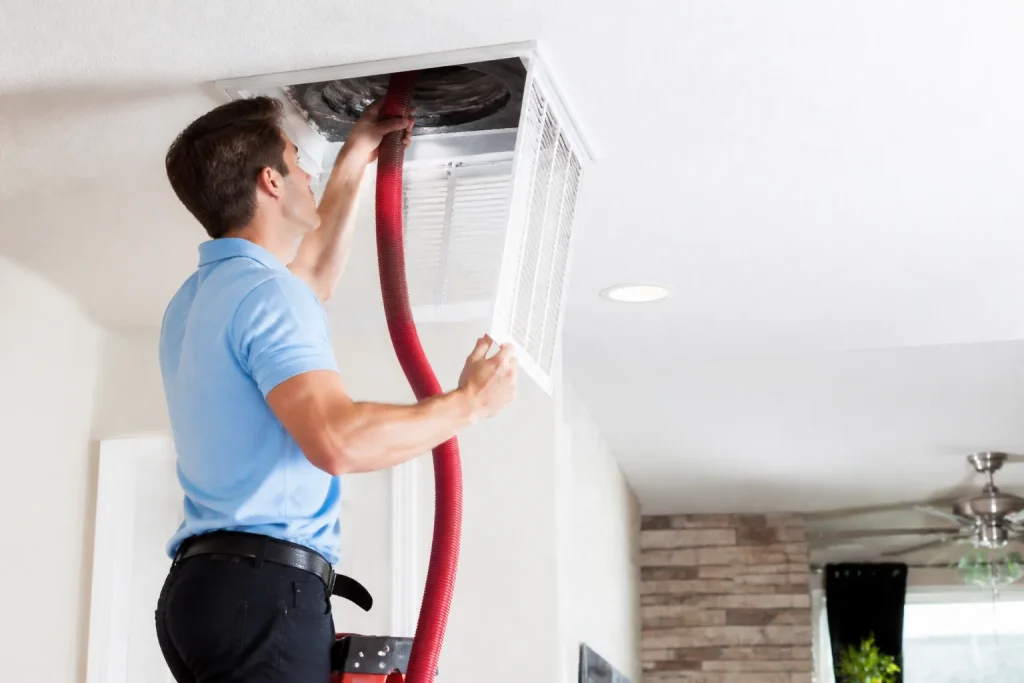
Dust settling on surfaces within 48 hours of cleaning isn’t a housekeeping problem. It’s your HVAC system redistributing what’s inside your ducts, and it means the source hasn’t been addressed. Most duct problems announce themselves quietly: a faint odor when the heat kicks on, one bedroom that never quite warms up, a cough that shows up every winter. By the time homeowners call us, the pattern has usually been there for months. Here’s how to tell whether what you’re noticing is your ducts asking for attention.
What are the top signs you need air duct cleaning?
The clearest sign is dust that returns almost immediately after you clean. If you wipe a shelf on Sunday and find it filmed over again by midweek, the debris is coming from the supply vents, not from the room. Other signals: a musty smell that appears only when the system runs, rooms that heat or cool unevenly, a recent remodel, and allergy symptoms that track with HVAC use. Any one of these is worth investigating. Two or more usually means it’s time to have the system scoped and assessed.
We keep a running list of the signals that come up again and again:
- Dust returning within days of cleaning on shelves, TV screens and dark furniture
- Musty or stale odor that starts when the air handler kicks on and fades when it stops
- Uneven temperatures between rooms on the same thermostat setting
- Visible debris around vent grilles or on the register slats
- Recent renovation or drywall work in the home
- Allergy or asthma symptoms that get worse during heating or cooling season
- Higher energy bills without a rate change or an obvious cause
None of these proves a dirty duct system on its own, which is why we scope before we recommend. But if you’re noticing two or three at once, it’s worth a look. In our experience, the houses with the most obvious symptoms turn out to have the oldest accumulated debris, not necessarily the dirtiest ducts, because the air handler has been steadily pushing it into the living space for years.
Is your dust coming from the ducts or from somewhere else?
Dust from dirty ducts has a signature. It settles on horizontal surfaces near supply vents first, it’s finer and more uniform than the lint you’d expect from fabric or pets, and it reappears within a few days of cleaning rather than a few weeks. Dust from other sources tends to concentrate near its origin: pet hair on upholstery, lint near the laundry, grit near exterior doors. If the distribution doesn’t match the room, look at the system. Before cleaning, we check the return duct and the air handler to confirm the dust is duct-borne.
One practical test: put a clean white cloth over a supply register for a few hours while the system runs, and check it against a cloth left on a shelf across the room. If the register cloth is significantly darker, the ducts are the source. If they’re similar, the dust is being generated in the room and the ducts are probably secondary.
We also look at the return side. A return that pulls air past a dusty mechanical room or an unfinished basement can introduce debris the supply side never sees. That’s the kind of thing we catch with a Rotobrush inspection before we ever pull a cleaning tool out of the bag.
Why are some rooms always too hot or too cold?
Uneven heating and cooling is more often a duct problem than an HVAC capacity problem. In a properly sized system, the furnace or heat pump isn’t asked to heat a single room; it’s asked to move a set amount of air through a network of ducts that must deliver it evenly. When one room lags, the usual cause is restricted or leaking ductwork: a disconnected joint, crushed flexible duct behind a wall, or a damper that’s been closed and forgotten. An oversized system will short-cycle and still leave a room uncomfortable, so adding capacity rarely fixes the symptom. Fixing the delivery path does.
What to look for before calling a technician:
- Temperature difference of more than a few degrees between rooms on the same thermostat setting
- A room that’s fine in spring but cold in winter (suggests a supply duct issue)
- Weak airflow at one or two vents compared to the rest
- Whistling or rattling at a specific register
- A duct run visible in the attic, crawlspace or garage that’s crushed, kinked or disconnected
Our repair and sealing work exists for exactly this reason. A cleaning-only service that doesn’t inspect for leaks and disconnects treats the symptom and not the cause. We’d rather tell you what we found and fix it in the same visit than have you call us again in six months with the same cold bedroom. If the duct system is intact but loaded with debris, air duct cleaning restores the airflow and the room usually follows.
Why does the house smell musty only when the system runs?
A musty odor that appears when the HVAC runs and disappears when it stops is one of the most reliable signs of biological growth somewhere in the system. The smell isn’t in the room; it’s being delivered by the moving air. When the system is off, nothing moves through the duct, so nothing reaches your nose. That timing is the tell. A smell present all the time could be a damp basement, a plumbing leak or a dehumidifier problem. A smell tied specifically to the air handler points inside the ductwork or at the evaporator coil.
Common sources we find during inspection:
- Condensation on the evaporator coil, feeding microbial growth in a drip pan or on the plenum
- Moisture in a return duct run through an unconditioned attic or crawlspace
- Duct board that’s absorbed moisture and stayed damp
- An old filter that’s been wet or left in too long
Cleaning alone won’t solve a moisture problem. You have to find the source and treat it. Our air quality and sanitizing service is built for this scenario, and for cases where contamination is more extensive, we keep Abatement Technologies filtration equipment on hand. If a musty smell comes back after cleaning, we’re looking at a moisture issue, not a debris issue, and the fix is different.
Do you need duct cleaning after a renovation?
Yes. Drywall dust is one of the most under-discussed problems in home renovation, and it doesn’t leave the ducts on its own. The fine gypsum powder produced during sanding is pulled straight into the return grilles by the running HVAC system, and once inside it settles on horizontal surfaces and duct liners. A typical furnace filter catches only a fraction of it. Left there, it accumulates, mixes with any moisture present, and ends up back in the living space. We’ve seen renovations where the homeowners replaced every filter in the house and still had drywall dust settling for months.
The timeline that works: have ducts cleaned shortly after final sanding and before the new finishes go in, and again if the renovation involved cutting into returns or relocating the air handler. General contractors rarely include duct cleaning in the scope because it’s outside their trade, so ask for it directly. Newly built homes have the same issue from construction debris, which is why a first-year cleaning is worth considering even without symptoms.
Do allergies that track with HVAC use mean the ducts are the problem?
Not always, but it’s worth investigating. If symptoms worsen when the heat or AC runs and improve when the system is off, the moving air is carrying something that isn’t present otherwise. That could be dust, dust mite debris, mold spores or pollen that’s entered through the return. It could also be low humidity or an unrelated indoor source, so we don’t jump to conclusions. What we do is scope the duct and inspect the coil and filter housing to see what’s actually there before recommending cleaning. If the system is clean, we tell you so.
Some situations warrant professional scoping before any cleaning begins: a recent water intrusion near the air handler, visible growth on the coil or plenum, symptoms that have worsened significantly since a renovation, or a home with a known mold issue. Those cases get a closer look, and the answer may be sanitizing alongside cleaning rather than cleaning alone. If the system runs on a Honeywell or Aprilaire whole-home air quality setup, we can inspect the equipment and the ductwork it serves as one system, since the two work together and issues on one side affect the other.
When should you call a pro?
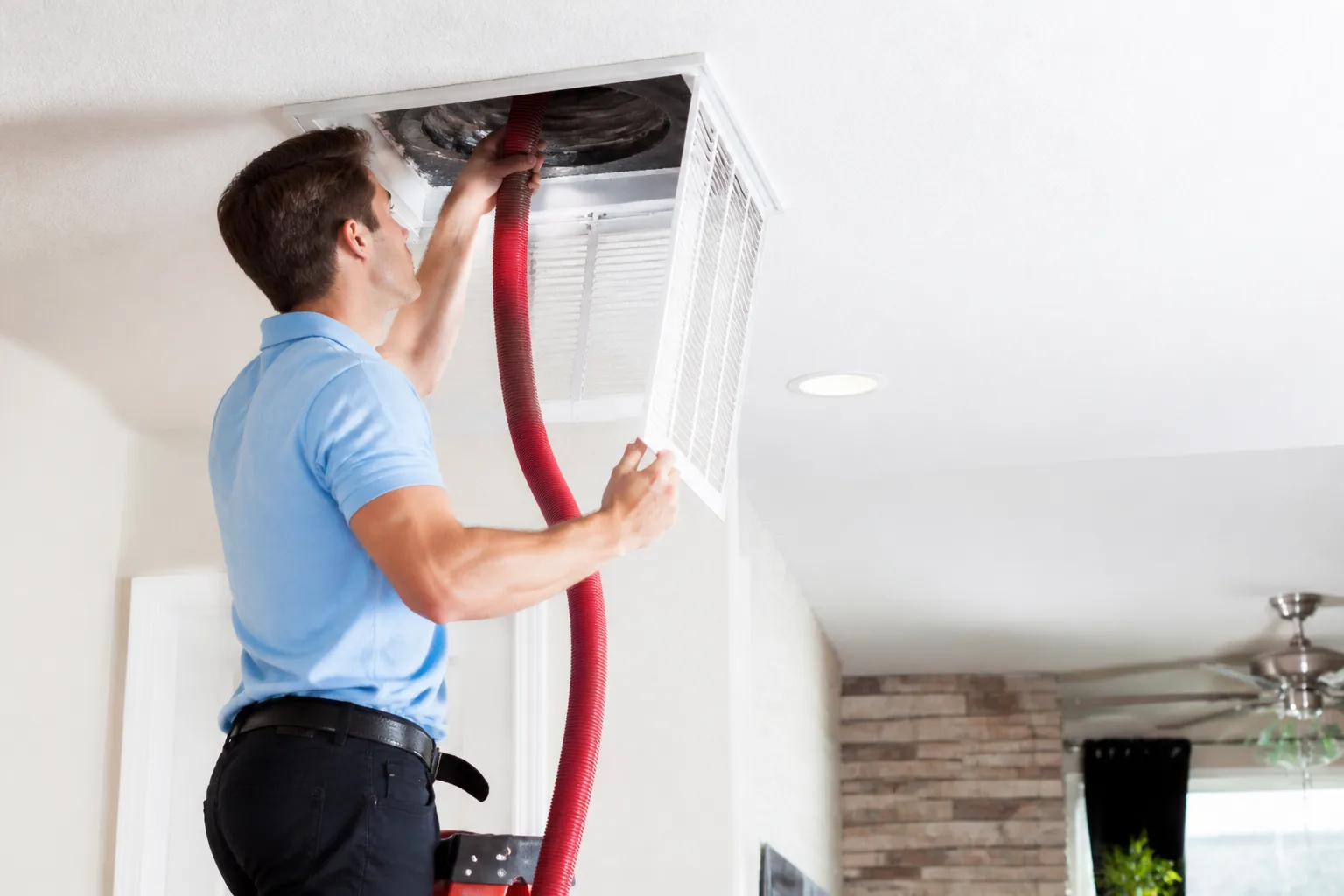
If you’ve noticed dust returning within days, a smell that arrives with the air handler, uneven room temperatures, or symptoms that track with HVAC use, it’s time for a professional assessment. A proper inspection uses a camera and professional-grade equipment to see inside the ducts. Our technicians have up to 10 years of experience with the Rotobrush and Nikro systems, and the inspection tells us whether cleaning, repair, sealing, sanitizing or none of those is the right answer. The estimate is free, and one flat price per system is agreed before any work starts.
Related services in Magnolia: if the symptom you’re chasing is a smell or a dust pattern, air duct cleaning is where an inspection starts. If uneven airflow is the issue, HVAC cleaning looks at the air handler and coil. If you haven’t had the laundry vent checked, dryer vent cleaning is a safety service worth scheduling separately.
The Bottom Line
Duct problems rarely appear as a dramatic event. They build up as gradual patterns: dust that keeps coming back, a room that never quite catches up, a smell that only shows up when the system runs. If you can point to two or more of the signals above, have the system inspected before deciding what to do. We don’t just clean; we inspect, seal, repair, and sanitize the full system, and we’ll tell you honestly if the ducts aren’t the problem. If you’re in Magnolia and need help, Magnolia Air Duct Cleaning offers free estimates. Call (877) 309-8232. We answer 24/7. Fast dispatch from 7am to 7pm, Sunday through Friday. The local pro we connect you with is licensed and insured as their state requires, and every job comes with before-and-after photos of your own system.
Frequently Asked Questions
You know your ducts need attention when dust returns within days of cleaning, a musty smell appears only when the HVAC runs, rooms heat or cool unevenly, or allergy symptoms track with system use. A professional scope confirms what’s inside before any cleaning is recommended. Call (877) 309-8232 for a free estimate and an honest assessment.
Most homes benefit from a cleaning every few years, and homes with pets, recent renovations or allergy-sensitive occupants may need it more often. There’s no fixed rule that fits every house. The better guide is symptoms: if dust, odors or uneven airflow return, it’s time for a look. Call (877) 309-8232 to schedule an inspection.
Dirty ducts can carry dust, dust mite debris, mold spores and pollen into the living space, and symptoms that worsen when the system runs are a signal worth investigating. Ducts are one possible source among several, which is why we scope before recommending cleaning. Call (877) 309-8232 for a free estimate.
Yes. Drywall dust pulled into the return ducts during sanding stays in the system and can settle back into rooms for months, even with new filters. Have the ducts cleaned after final sanding and before finishes go in, and again if returns were cut or the air handler was moved. Call (877) 309-8232 to schedule.
Written by the team at Magnolia Air Duct Cleaning.
Need Air Duct Cleaning Help?
Call Magnolia Air Duct Cleaning - the local pro we connect you with is licensed and insured, here with fast help in Magnolia.
(877) 309-8232