
Last updated November 24, 2026
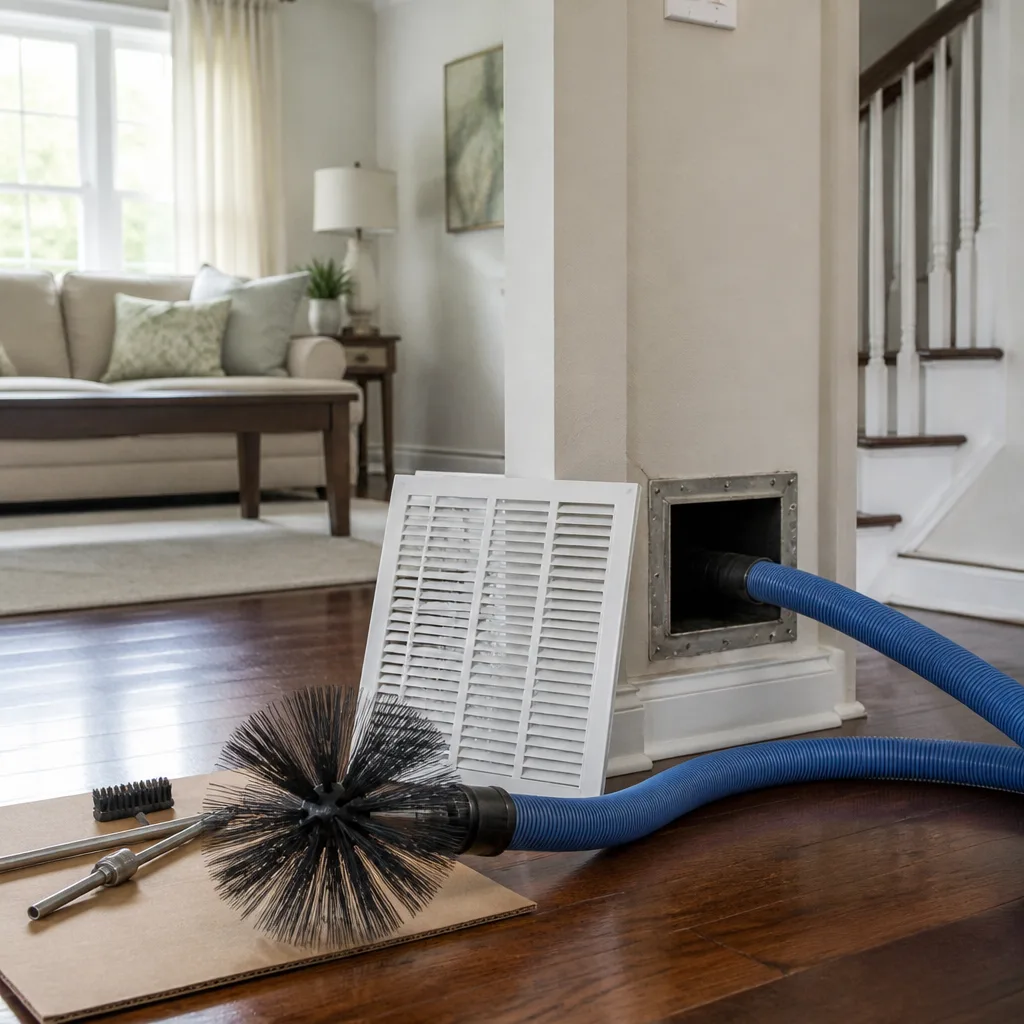 Whole-home duct cleaning
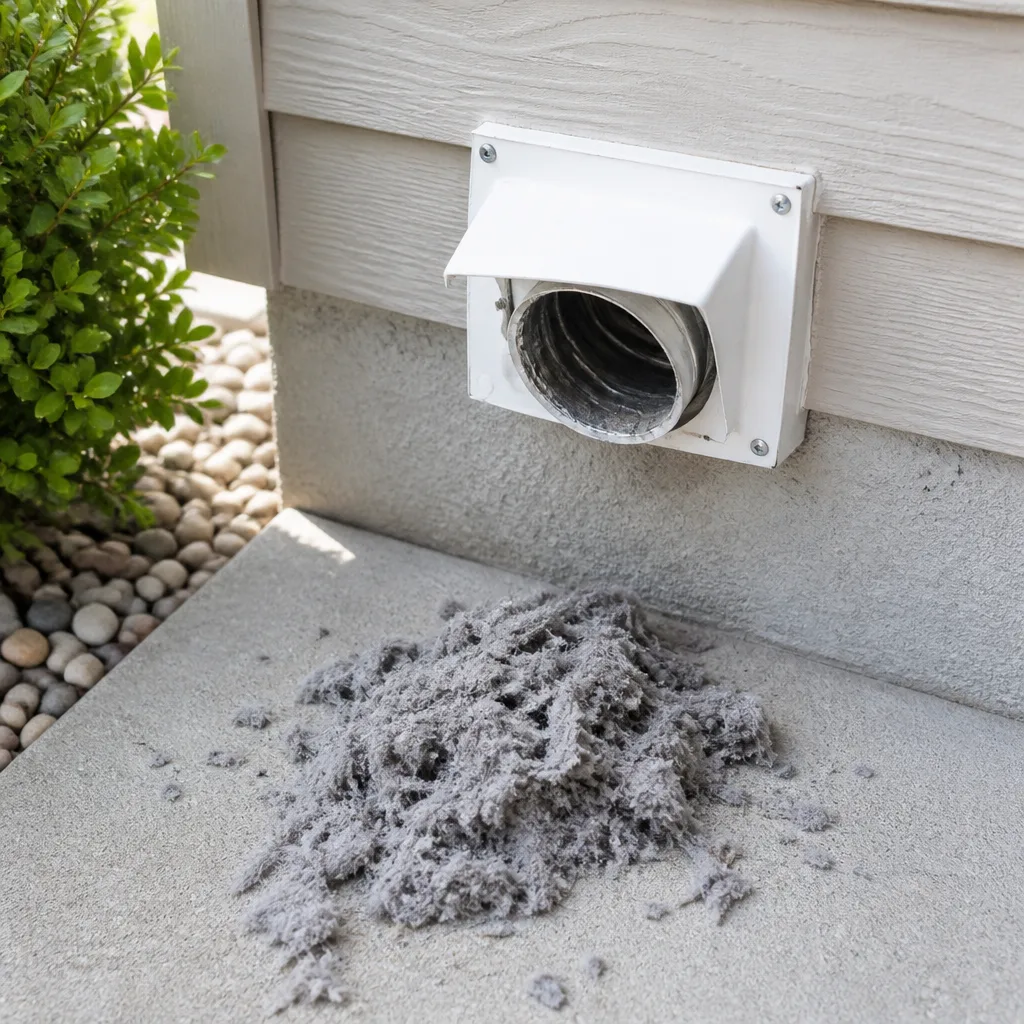 Dryer vent cleaning
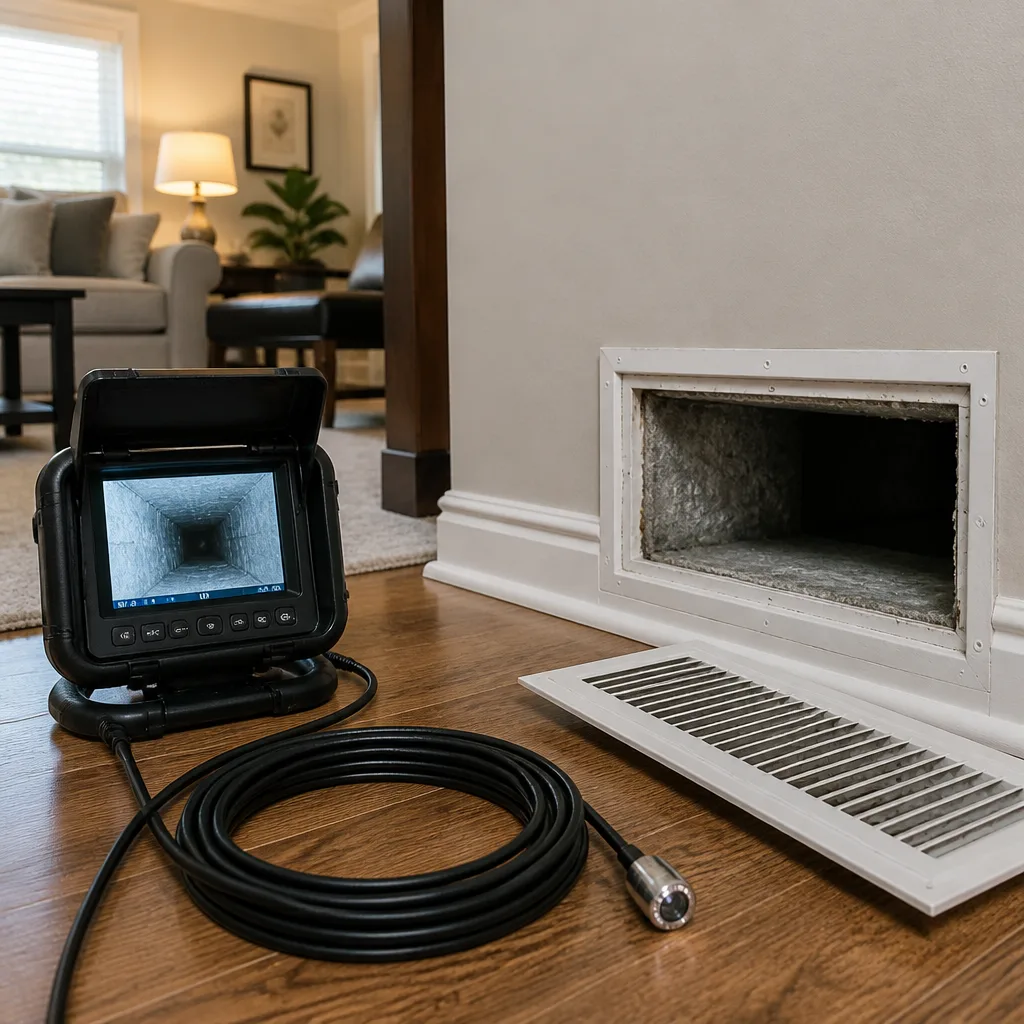 Camera inspection
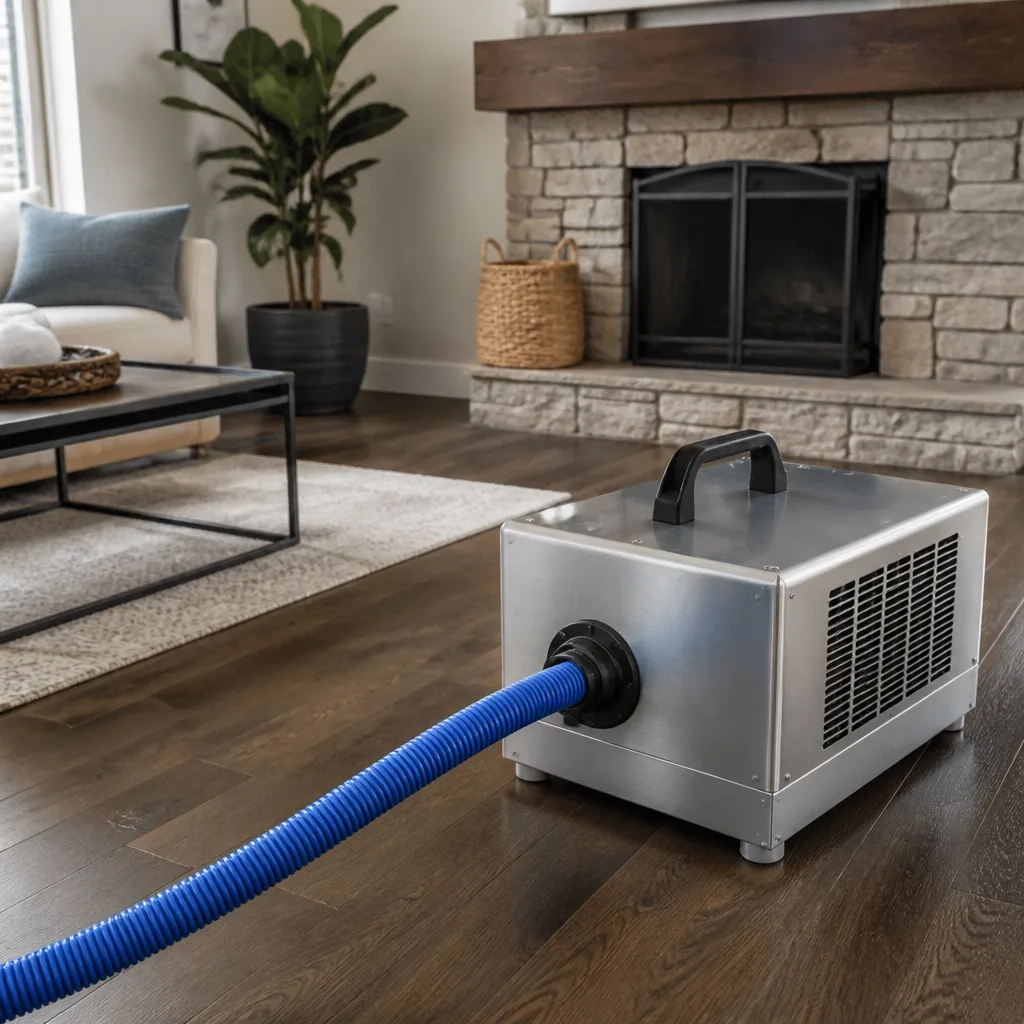 Sanitizing & deodorizing
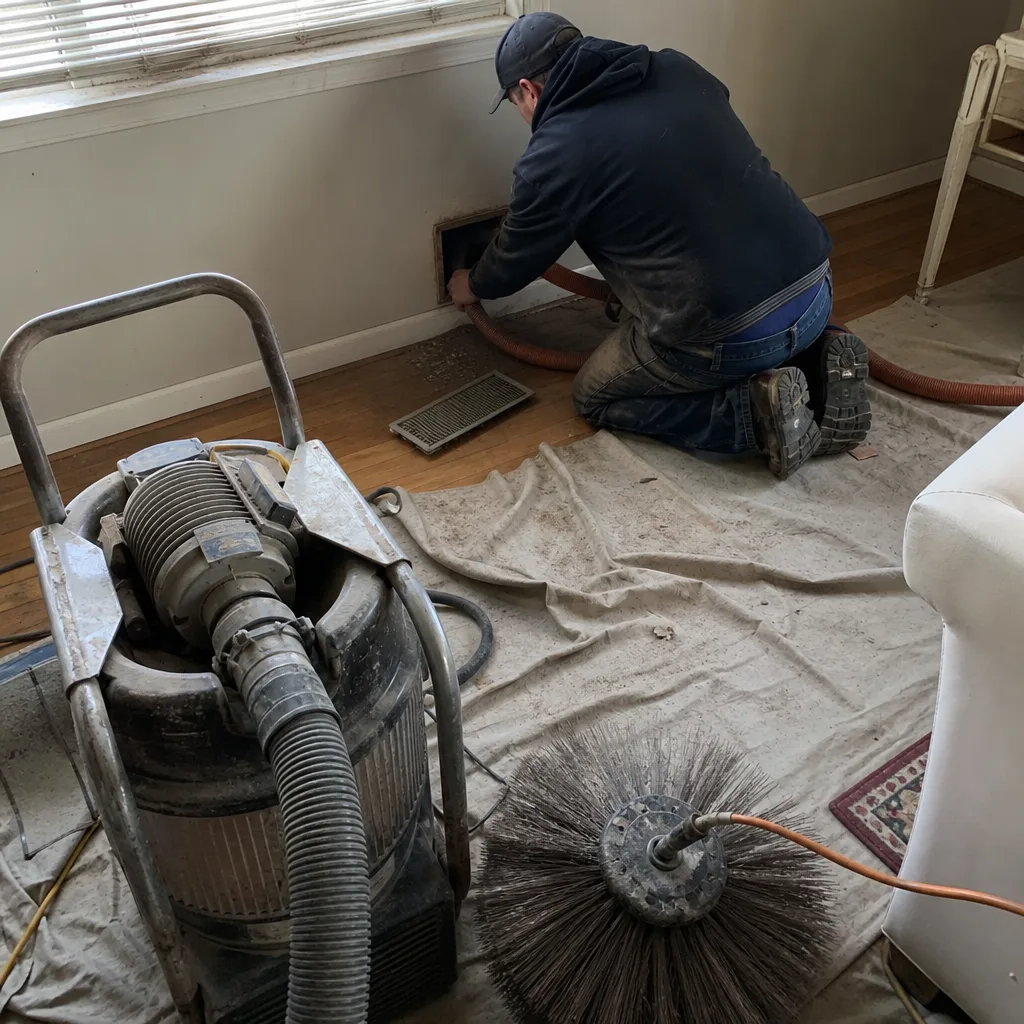
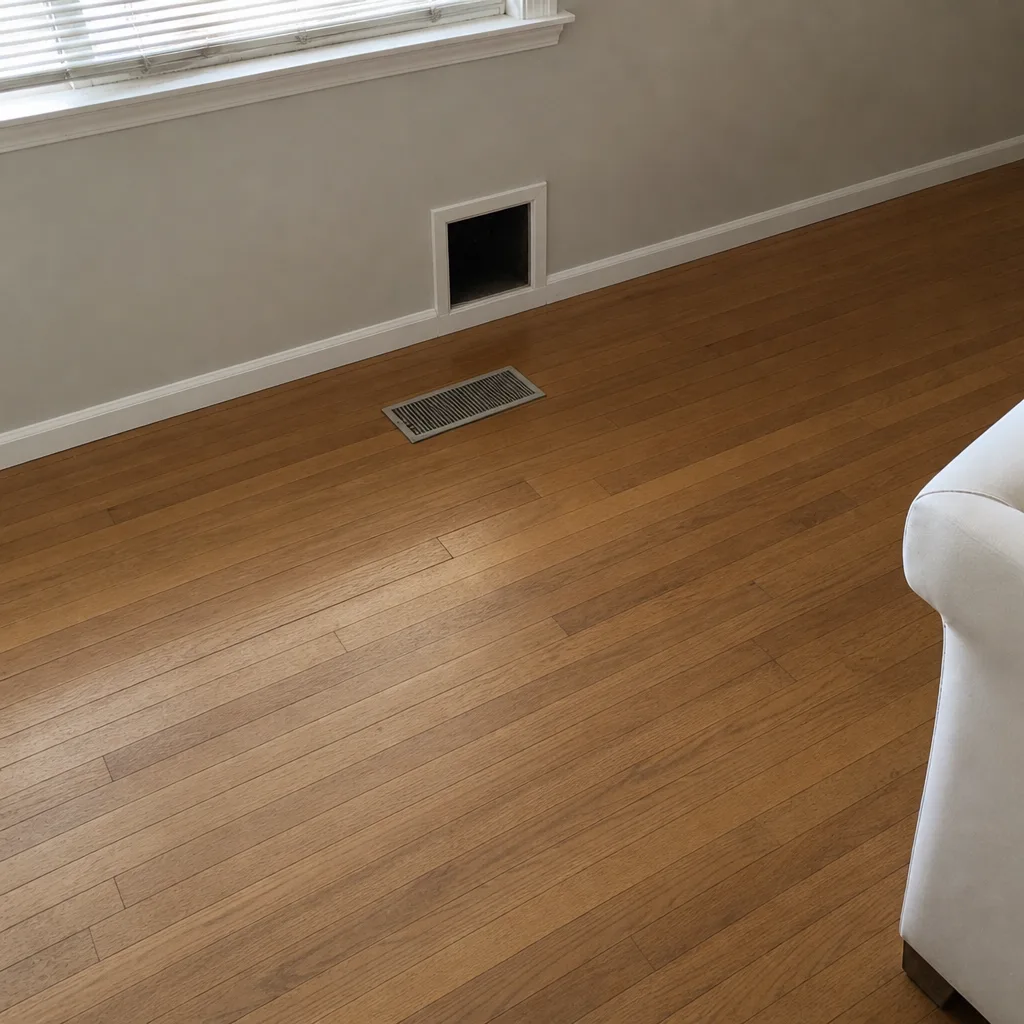
Whole-system duct and dryer vent check with before-and-after photos - you see exactly what came out of your vents
That "$99 whole-house special" is a bait ad - the real number appears once they are in your hallway, or the "clean" is a shop-vac at the register. We photograph the inside of your ducts before and after instead.
Air Duct Cleaning Maintenance Checklist for Magnolia Homeowners
Most homeowners treat duct care as a cleaning task: wait for visible dust, then book a cleaning. But a checklist built around cleaning intervals misses the point. Replacing your filter every 90 days while ignoring the duct system behind it is like changing your oil but never checking the engine. The visible task gives a false sense of maintenance while the real issue compounds out of sight. What actually protects a home is observation: knowing what your registers look like, how your airflow behaves room to room, and what changes are worth investigating. This guide gives Magnolia homeowners a working checklist built around monitoring, not arbitrary timing, with specific cues that separate normal wear from something worth a professional look.
Quick Answer
A duct maintenance checklist for Magnolia homes works best as a quarterly monitoring routine, not a fixed cleaning schedule. Walk your registers each season, note airflow differences room to room, watch for dust patterns and smells, and document everything so a professional assessment has a baseline to compare against. When a cue repeats or worsens, that’s when you call for inspection.
Styles & brands we work with
- Whole-home duct cleaning
- Dryer vent cleaning
- Camera inspection
- Sanitizing & deodorizing
Table of Contents
- Why observation beats a cleaning schedule
- The quarterly register inspection
- Tracking airflow consistency without tools
- What to document before and after a professional cleaning
- Checklist items specific to Magnolia homes
- When monitoring becomes a professional inspection
- A seasonal cadence for Magnolia
- Common mistakes to avoid
Why observation beats a cleaning schedule
A duct system doesn’t fail on a calendar. It drifts. A joint loosens a little, a flex run sags, a return pulls in a bit more dust than it should. None of these announce themselves. They show up as small, cumulative changes that a homeowner can catch early with the right attention, or miss entirely until the problem is expensive.
That’s the case for a monitoring checklist. It gives you a repeatable way to look at the same things in the same order, so you notice when something is off. Cleaning still matters, and in Magnolia a professional air duct cleaning done right is worth scheduling. But the timing should follow what your system is telling you, not a number on a marketing postcard.
Here’s the mindset shift in practice:
- Old model: clean on a schedule, ignore the system in between, react when something breaks.
- Monitoring model: check the same cues each season, document what you find, schedule service when the cues point to it.
We’ve seen both approaches play out across Magnolia homes. The homeowners who monitor tend to catch small issues, like a disconnected flex run in a crawl space or a register blowing warm in cooling season, while they’re still small. The ones who don’t usually find out when a room stops heating or cooling properly. Our technicians have up to 10 years of experience, and the pattern holds year after year.
The quarterly register inspection
This is the backbone of the checklist. Once a quarter, take a slow walk through every room with a supply or return register. It takes about 15 minutes and needs no tools. You’re looking for visual and smell cues that point to different categories of problems.
Work through each register in this order:
- Look at the grille face. A thin, even film of dust is normal. A dark streaked pattern, or a patchy buildup concentrated on one side, suggests airflow is being disrupted or that debris is being pushed through.
- Look inside the register slot. Shine a phone flashlight into the throat of the duct. You should see a clean, uniform interior surface. Visible matted debris, dark staining, or loose material clinging to the walls is worth noting.
- Feel the airflow. Hold your hand a few inches from the grille. Note whether it feels strong, weak, or uneven across the face.
- Smell the air. A faint dusty smell at startup is common. Persistent musty, sour, or smoky odors coming from a specific register are a different signal and should be written down.
- Check the grille attachment. A grille that rattles, sits loose, or has gaps at the edge is letting air bypass the duct. That’s a small leak with a straightforward fix.
- Note the room and the register. Write down the room name, which register (supply or return), and what you saw, felt, or smelled.
The point isn’t to diagnose anything. It’s to build a record. A single odd register might be nothing. The same register showing the same cue three months in a row is a pattern, and patterns are what we look at when a homeowner calls.
Tracking airflow consistency without tools
Airflow is the earliest, cheapest indicator of duct leakage or blockage, and you don’t need instruments to track it. What you need is consistency: checking the same rooms under the same conditions so the comparison is fair.
Pick a mild day, set the thermostat to a steady temperature, let the system run for a bit, then do a walk-through. Compare rooms against each other. In a balanced system, rooms of similar size should feel similar. When one room feels noticeably weaker than the rest, or a room that used to be strong has become weak, that’s a signal.
Things to note on your airflow walk:
- Weak rooms: Which rooms consistently under-deliver, and have they changed?
- Oversupply: Is one room blasting while others lag? That often points to a damper or a leak near that branch.
- Temperature drift: Does a room struggle to hold temperature even when its register feels strong?
- Cycling behavior: Does the system short-cycle on mild days when it shouldn’t need to?
- Noise at the grille: Whistling or a whoosh at one register can mean a restriction or a leak close by.
Behind the walls, leakage and blockage both starve rooms of air, and they can look identical from the vent side. That’s fine for monitoring purposes: you’re flagging the symptom, not naming the cause. In our experience across Magnolia, airflow imbalance is often the first thing a homeowner notices and the last thing they think to mention when they call. Mention it. It shortens the diagnostic.
What to document before and after a professional cleaning
Documentation is what gives future assessments a baseline. Without it, every inspection starts from zero, and no one, including you, can say whether anything changed. A simple record kept in a notes app or a folder on your phone is enough.
Before a professional cleaning, record:
- The date and the reason you’re scheduling (what cue triggered the call).
- Photos of each register face, including any problem registers you flagged.
- Your airflow notes: which rooms were weak, which were strong.
- Any odors and where they seemed to come from.
- The filter size and the date you last changed it.
After the cleaning, add:
- Before-and-after photos of your own ducts, taken by the technician. A company that documents its own work gives you something to compare against next time.
- Notes on what was found: debris volume, any disconnected or damaged runs, any leaks identified.
- Any repairs or sealing done during the visit, and what was left for a follow-up.
- The date of the next recommended check.
This is where a full-scope company earns its keep. When cleaning turns up a sagging flex run or a loose joint, a company that also handles duct repair and sealing can resolve it in the same visit rather than sending you looking for a second contractor. We keep that baseline record for every Magnolia home we work in, because the next assessment is only as good as the one before it.
Checklist items specific to Magnolia homes
Some checklist items only make sense for the kind of housing stock you find in Magnolia. Crawl space duct runs, older flex duct installations, and systems serving homes with wood-burning or gas appliances all add items to the list.
Crawl space duct runs. Many Magnolia homes route supply and return runs through a crawl space. Those runs are out of sight, so they need a deliberate check. Look for sagging flex duct, runs resting on the ground, disconnected sections, and condensation on the duct jacket. A sagging run restricts airflow and a disconnected one dumps conditioned air into the crawl space. If you’re not comfortable in the crawl space, note “crawl space runs: not inspected” and let a professional handle it.
Older flex duct installations. Flex duct is common and works well when installed properly. Over time, the inner liner can tear, joints can slip, and the outer jacket can separate from the boot. When you’re at a register, look for a visible gap between the boot and the duct, or a jacket that’s pulled away.
Homes with wood-burning or gas appliances. A wood stove or fireplace and a gas range or furnace both affect what’s in your air and how your system handles it. Note any soot film near returns, and any combustion smell that lingers. Carbon monoxide is a separate safety concern, and a working CO detector near sleeping areas belongs on the checklist regardless of duct condition.
Whole-home air quality equipment. If your home has a Honeywell or Aprilaire filtration or humidity system tied into the ductwork, add a check of the filter or media pad to your quarterly walk. These systems work hard and their filters load up. Knowing the equipment you have makes the monitoring more precise, which is exactly why our technicians are trained on Honeywell and Aprilaire systems.
Dryer vent. Not technically part of the duct system, but it belongs on any home maintenance checklist. Lint buildup in a dryer vent is one of the leading causes of residential fires. Add a visual check of the exterior vent flap and a note of any drying-time slowdown to your quarterly list, and schedule dryer vent cleaning when either cue shows up.
When monitoring becomes a professional inspection
A checklist is a screening tool, not a diagnosis. At some point a cue crosses the line from “note it and watch” to “call someone.” Here’s where that line sits.
Call for a professional inspection when you see any of these:
- A cue that repeats. The same register showing the same dust pattern or smell across two quarterly checks.
- A cue that worsens. Airflow in a room getting weaker over time, or a smell getting stronger.
- Visible debris inside the duct throat that doesn’t clear after filter changes.
- Persistent musty or sour odors from any register, which can point to moisture or microbial growth inside the system.
- Airflow imbalance that wasn’t there before. A room that used to be fine is now the weak one.
- Visible duct damage at a register, in a crawl space, or where ductwork is exposed.
- Recent renovation or pest activity. Construction dust and rodent activity both send debris into duct systems in ways a homeowner can’t assess from the vent side.
An inspection isn’t the same as a cleaning. A good inspection identifies what’s actually going on: debris load, leakage, disconnected runs, contamination. Professional-grade equipment matters here. We use Rotobrush and Nikro systems built for duct work, and Abatement Technologies filtration equipment for contamination and elevated air quality scenarios. That’s the difference between a real assessment and a shop-vac pass. If you also want the air handler and coil looked at, that falls under HVAC cleaning and can usually be scoped with the duct inspection.
A seasonal cadence for Magnolia
You don’t need to check everything every month. A simple seasonal cadence keeps the monitoring light enough to actually do.
- Spring (before cooling season): Full register walk, airflow comparison, filter change, crawl space run check, dryer vent visual.
- Summer: Quick register pass focused on weak rooms and odors; note any cooling complaints by room.
- Fall (before heating season): Full register walk, airflow comparison, filter change, check of wood-burning and gas appliance areas, whole-home air quality filter check.
- Winter: Quick register pass focused on heating complaints and any new smells; note drying time on laundry as a dryer vent cue.
Two full walks and two quick passes a year is enough to catch most drift. Anything you note in the quick passes feeds into the next full walk, so nothing gets lost. If a full walk turns up more than one repeat cue, that’s the time to book the professional assessment and start the before-and-after documentation.
Common Mistakes to Avoid
- Monitoring only the registers you can see easily. The register behind the couch and the return in the hallway get skipped, and they’re often where the first cues show up.
- Treating a filter change as the whole job. A new filter doesn’t clean the ducts behind it, and relying on it alone hides the cues the checklist is meant to catch.
- Ignoring the crawl space because it’s unpleasant. Out-of-sight duct runs are where disconnected sections and sagging flex duct hide. If you won’t go in, have someone who will check them.
- Skipping documentation. Without before-and-after photos and written notes, each inspection is a fresh start with no baseline to compare against.
- Calling only when something breaks. By the time a room stops heating or cooling, the underlying issue has usually been developing for a while.
- Assuming a cheap coupon covers the full system. Per-vent pricing and teaser offers rarely reflect whole-system work. Ask for a flat price per system agreed before work starts.
- Leaving the dryer vent off the list. It’s a fire-safety item, not a comfort item, and it belongs on the quarterly walk.
When to Call a Professional
Call when a checklist cue repeats, worsens, or crosses into territory you can’t assess from the vent side: visible debris inside the duct throat, persistent odors, airflow imbalance that wasn’t there before, visible duct damage, or recent renovation and pest activity. Call sooner if you’ve never had the system inspected and you’ve been in the home a while. An inspection gives you the baseline the checklist depends on. Magnolia Air Duct Cleaning offers free estimates in Magnolia. Call (877) 309-8232. We answer 24/7, and fast dispatch runs 7am to 7pm, Sunday through Friday, closed Saturday. A call outside dispatch hours is booked into the next opening, Sunday through Friday, 7am to 7pm.
See the difference
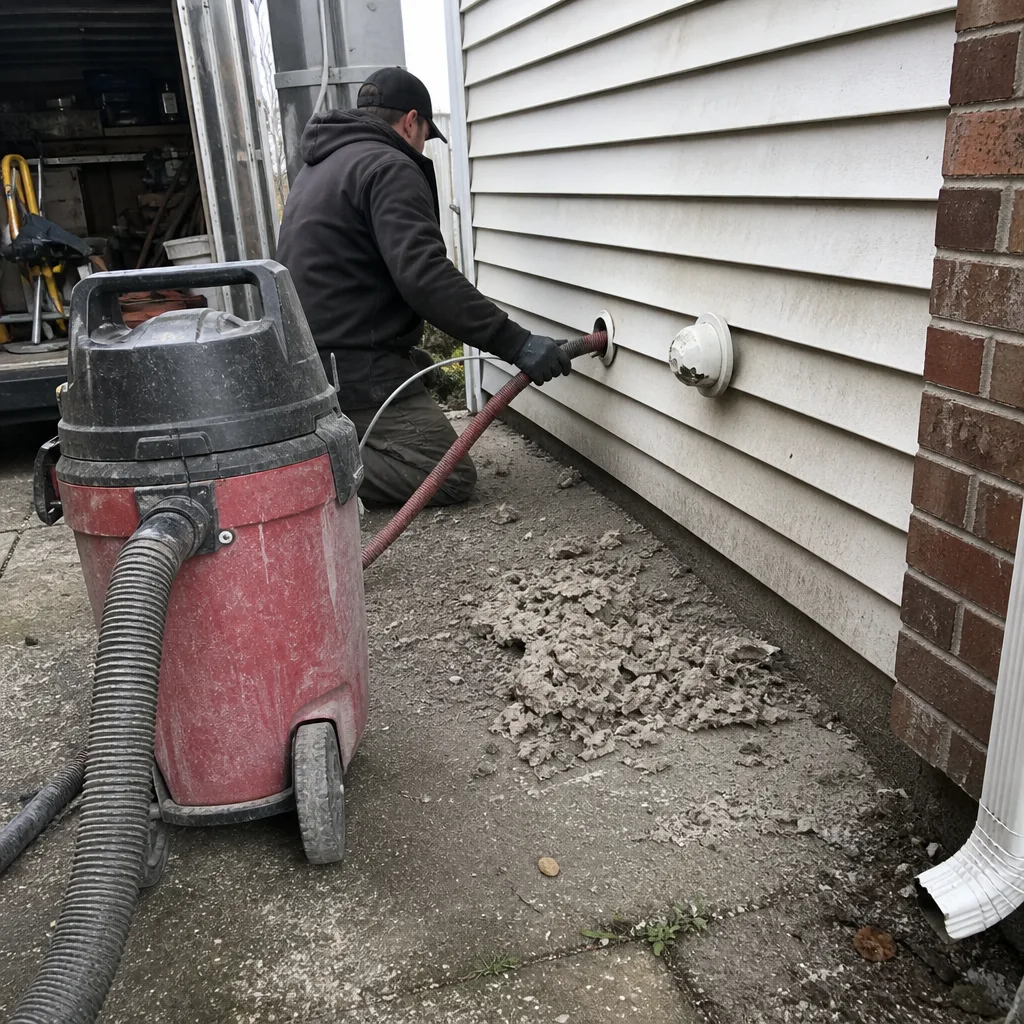 Before
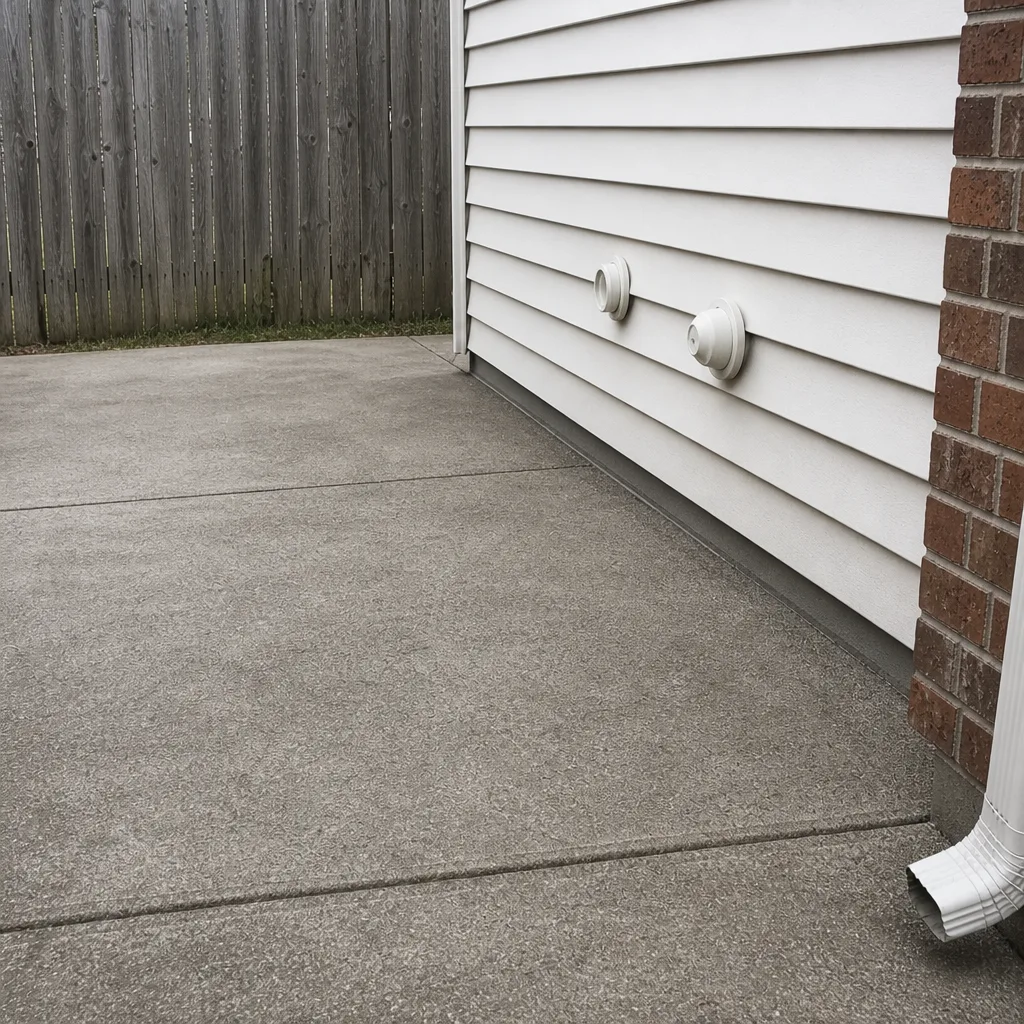 After
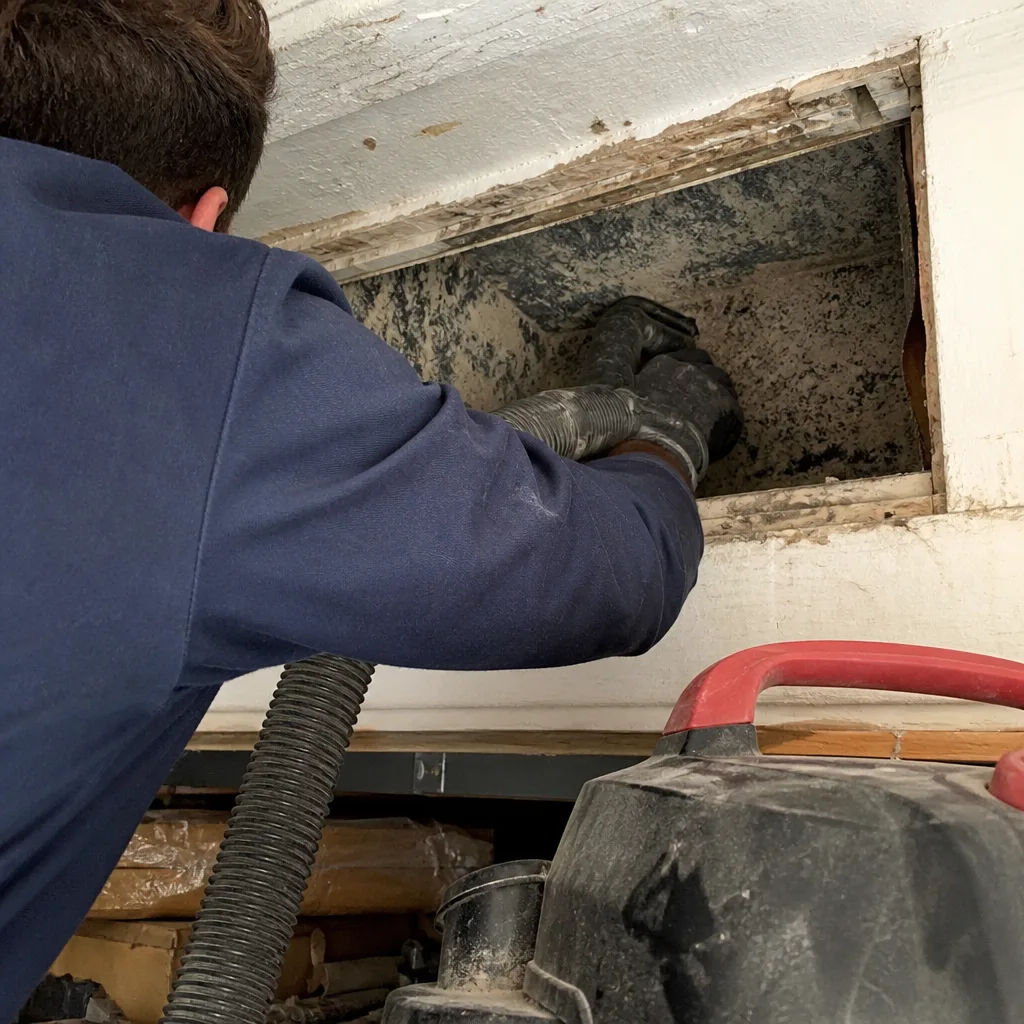 Before
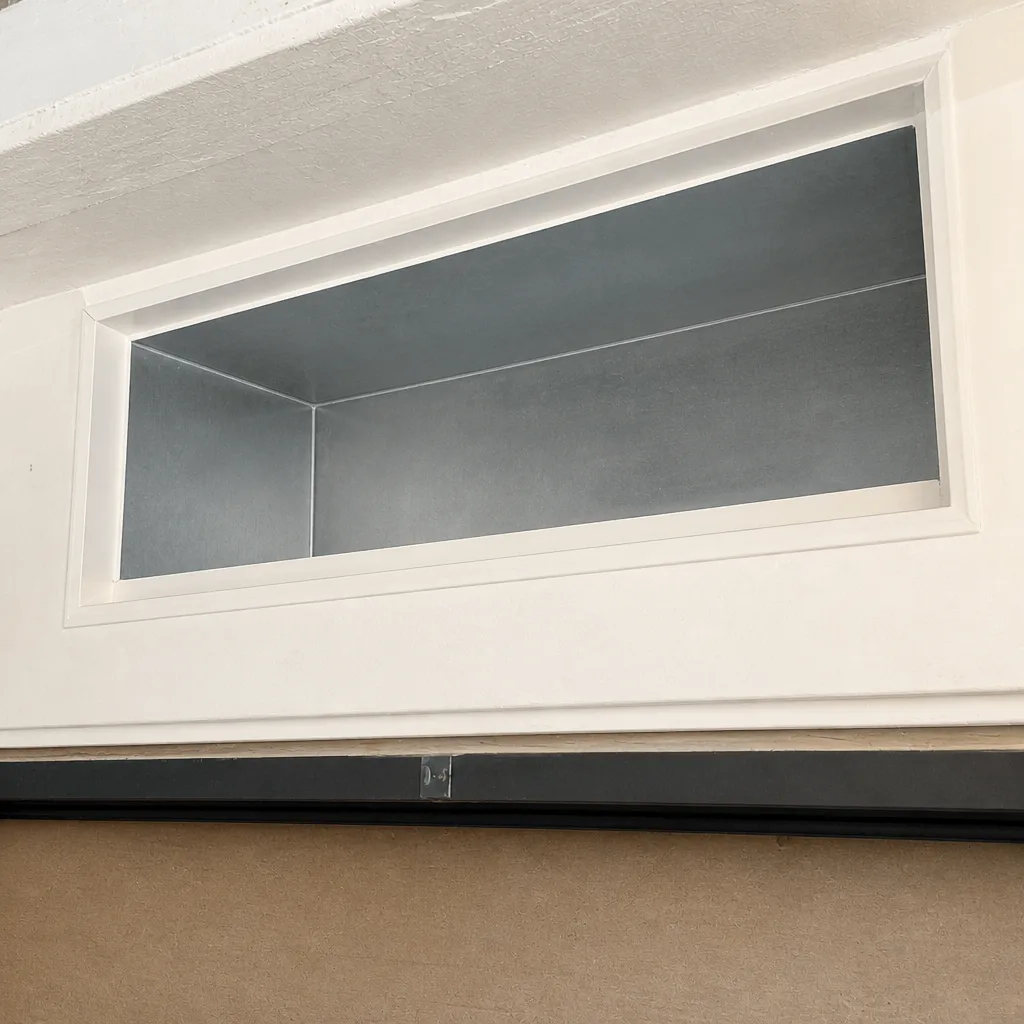 After
 Before
 After
Frequently Asked Questions
There’s no universal interval, and that’s the honest answer. A home with pets, recent renovation, or a smoker needs attention sooner than a low-occupancy home with a clean history. The monitoring checklist tells you when: repeat cues, worsening airflow, or visible debris inside the duct throat are the triggers. Call (877) 309-8232 for a free estimate, and we’ll tell you what we see.
Look at the grille face for streaked or patchy dust, shine a light into the duct throat for visible debris or staining, feel the airflow strength, smell the air for musty or sour odors, and check that the grille sits tight. Write down the room, the register, and what you found. It takes 15 minutes and builds the record you’ll rely on later.
Weak or uneven airflow in rooms of similar size, a room that used to be fine and now isn’t, whistling at a register, or a grille that’s noticeably stronger than its neighbors are all cues worth noting. You can’t confirm a leak from the vent side, but you can flag the symptom and have it checked. Call (877) 309-8232 to schedule an inspection.
Yes. Crawl space duct runs are out of sight and prone to sagging, disconnection, and condensation on the jacket. Add a deliberate crawl space check to your two full walks each year. If you’re not comfortable going in, note it and have a professional check those runs during an inspection.
Yes, and ask for them of your own ducts. Before-and-after photos give you a visual baseline to compare against at the next assessment, and they tell you the work actually happened. Any company that does real duct work should be able to show you what they found and what they did.
A checklist inspection is a screening: you’re noting cues, not diagnosing. A professional cleaning and inspection identifies the actual cause, removes the debris, and can repair and seal issues found along the way. We handle the full scope, from cleaning through duct repair and sealing, so one visit covers the whole picture. Call (877) 309-8232 for a free estimate.
The Bottom Line
Your air duct system doesn’t need a calendar, it needs attention. Walk your registers each season, track airflow room to room, watch for repeat and worsening cues, and document everything so the next assessment has a baseline. Add the Magnolia-specific items: crawl space runs, older flex duct, wood-burning and gas appliance areas, whole-home air quality filters, and the dryer vent. When a cue crosses into professional territory, call. Magnolia Air Duct Cleaning handles the full system, cleaning, sealing, repair, and sanitizing, with free estimates and a flat price per system agreed before work starts.
Contact
Ready for a professional assessment of your duct system? Magnolia Air Duct Cleaning offers free estimates across Magnolia. Call (877) 309-8232. We answer 24/7, and fast dispatch runs 7am to 7pm, Sunday through Friday, closed Saturday.
Written by the team at Magnolia Air Duct Cleaning.